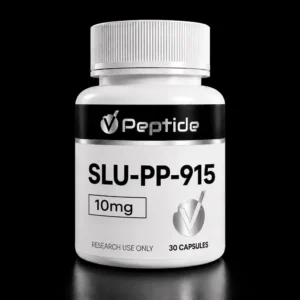
Description
SLU-PP-915 is a synthetic small molecule research compound developed in the Burris laboratory at Saint Louis University as part of the SLU-PP series of estrogen-related receptor (ERR) agonists. The SLU-PP research compound series was developed to explore ERR receptor pharmacology — a family of orphan nuclear receptors (ERRα, ERRβ, ERRγ) involved in mitochondrial biogenesis, oxidative metabolism, and skeletal muscle biology research. SLU-PP-915 has been characterized in the academic research literature as an ERR-targeted research compound with a distinct pharmacological profile relative to the earlier SLU-PP-332 compound. The compound has been investigated for ERR receptor agonism, mitochondrial biogenesis research, PGC-1α signaling cascade research, and comparative pharmacology across the SLU-PP research compound series. This 10mg oral capsule format is offered strictly for laboratory research applications investigating ERR receptor pharmacology, mitochondrial biology research, and comparative small-molecule ERR agonist SAR studies. The oral capsule format uses microcrystalline cellulose (MCC) as the standard capsule excipient in a gelatin capsule shell.
Benefits (Research Focus)
• ERR receptor pharmacology research — studied as a research tool for estrogen-related receptor (ERRα, ERRβ, ERRγ) agonist pharmacology research
• Mitochondrial biogenesis research — investigated for research applications examining mitochondrial biogenesis pathway endpoints in cell research models
• PGC-1α signaling research — explored for PGC-1α (peroxisome proliferator-activated receptor gamma coactivator 1-alpha) signaling cascade research
• SLU-PP series SAR research — examined alongside SLU-PP-332 for comparative structure-activity relationship studies within the SLU-PP research compound series
• Comparative ERR agonist research — researched alongside other ERR-targeted research compounds and orphan nuclear receptor agonist small molecules
What Researchers Look At
• ERRα, ERRβ, and ERRγ receptor binding affinity and selectivity profiles
• Mitochondrial biogenesis pathway markers and mitochondrial DNA copy number research endpoints in cell research models
• PGC-1α gene expression and downstream oxidative metabolism gene panels
• Comparative pharmacology versus SLU-PP-332 and other SLU-PP series research compounds
• Comparative pharmacology across the broader orphan nuclear receptor agonist research compound class
Quick Specs
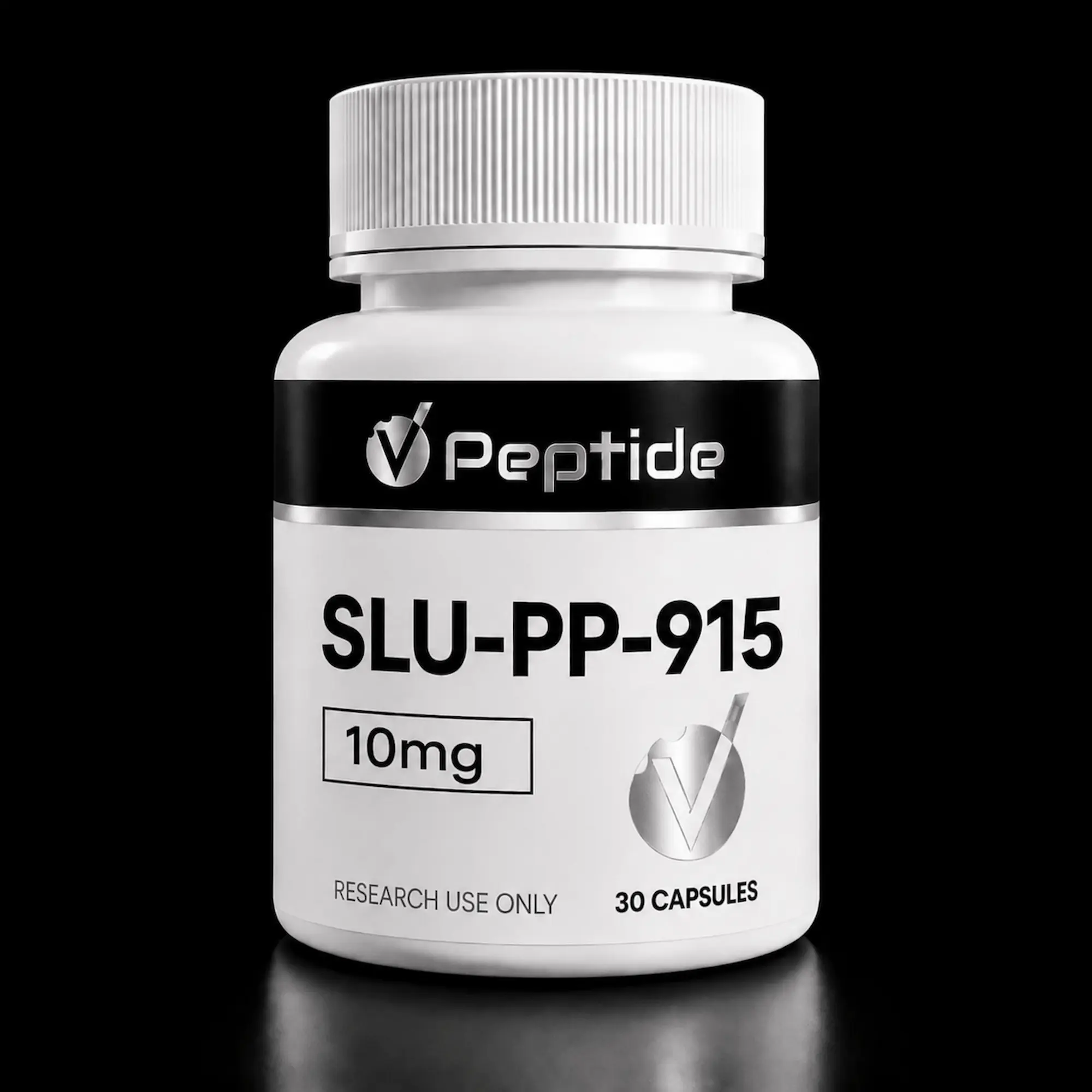
• Form: Gelatin capsule
• Strength: 10 mg SLU-PP-915 per capsule
• Quantity: 30 capsules per bottle
• Total SLU-PP-915 per Bottle: 300 mg
• Other ingredients: Microcrystalline cellulose (MCC, excipient), gelatin capsule shell
• Appearance: Standard gelatin capsule presentation
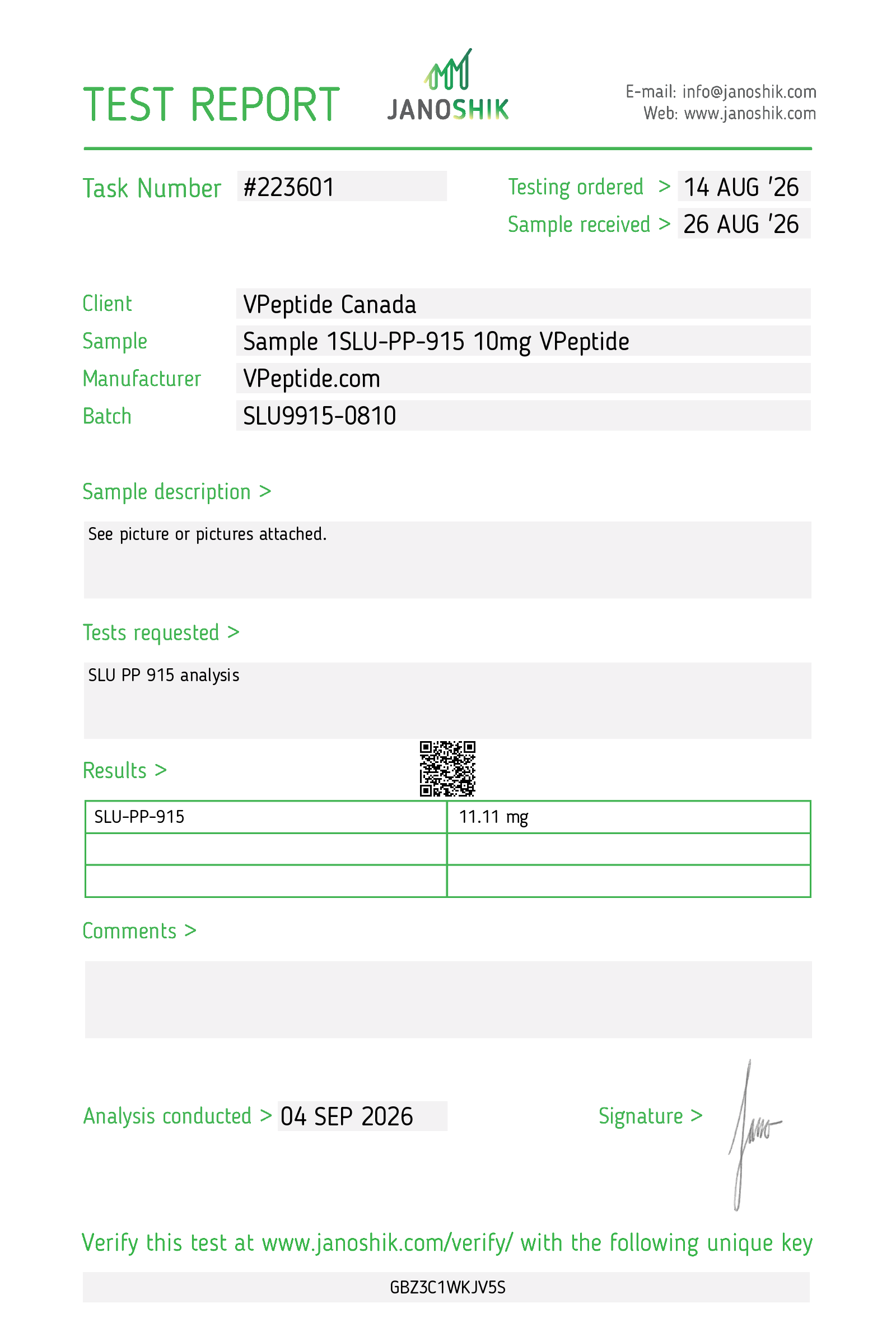
• Purity: ≥99%
• Identity: MS-verified (per COA)
• Storage: Protect from light
Identity Basics
• Compound: SLU-PP-915
• Synonyms: Saint Louis University research compound SLU-PP-915; ERR agonist research compound
• Class: Synthetic small molecule; estrogen-related receptor (ERR) agonist research compound; orphan nuclear receptor agonist
• Series: SLU-PP research compound series (Burris laboratory, Saint Louis University); companion compound to SLU-PP-332
• Originator: Burris laboratory, Saint Louis University (academic research compound origin)
• Formula: Verify against batch COA
• Molecular Weight: Verify against batch COA
• CAS: Verify against batch COA
⚠️ Disclaimer
- This product is intended for laboratory research use only.
- Not for human or veterinary use.
- Not approved for diagnostic, therapeutic, or medical applications by FDA, Health Canada, or any regulatory authority.
- Investigational academic research compound only — SLU-PP-915 has not been evaluated for safety or efficacy in humans.
- Handle using appropriate laboratory safety procedures and personal protective equipment.
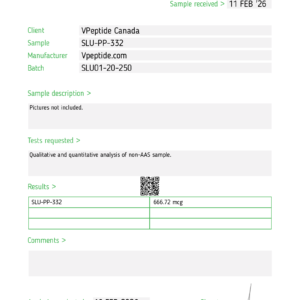
COA Verification Notice: Even if the capsule label or product image states a certain concentration, always go by the COA for the true verified value. We reference the COA to determine the verified concentration and purity of each batch, regardless of what the label or product image indicates.
Third-Party Testing
https://verify.janoshik.com/tests/223601-Sample_1SLUPP915_10mg_VPeptide_GBZ3C1WKJV5S