Description
Vasoactive Intestinal Peptide (VIP) is a 28-amino-acid neuropeptide originally isolated from porcine intestine by Sami Said and Viktor Mutt in 1970 and subsequently characterized as a member of the secretin / glucagon peptide superfamily. VIP signals through two G-protein-coupled receptors, VPAC1 (VIPR1) and VPAC2 (VIPR2), both belonging to the class B (secretin-like) GPCR family, activating Gs-coupled cAMP/PKA signaling cascades. The peptide is widely distributed across central and peripheral tissues including the gastrointestinal tract, lung, brain, and immune system, and has been extensively investigated in academic research literature (Said, Mutt, Gozes, Delgado, and colleagues) for VPAC receptor pharmacology, cAMP signaling cascade research, and comparative pharmacology versus other secretin family peptides (PACAP, GHRH, secretin). VIP is studied here primarily as a research tool for VPAC1/VPAC2 receptor pharmacology and structure-activity relationship (SAR) studies of secretin family peptides.
Benefits (Research Focus)
• VPAC1 / VPAC2 receptor pharmacology — studied for class B GPCR binding activity at the two VIP receptor subtypes
• cAMP / PKA signaling research — investigated for Gs-coupled signaling cascade activation and downstream PKA pathway endpoints
• Secretin family peptide SAR — explored for structure-activity relationships across the secretin/glucagon peptide superfamily
• Peptide pharmacology research — examined for receptor selectivity profiles versus related peptides (PACAP, GHRH, secretin)
• Comparative receptor research — researched alongside other class B GPCR-targeted peptide research compounds
What Researchers Look At
• VPAC1 and VPAC2 receptor binding affinity and selectivity profiles
• cAMP accumulation, PKA activation, and CREB phosphorylation in cell research models
• Comparative pharmacology versus PACAP (pituitary adenylate cyclase-activating polypeptide) and other secretin family peptides
• Plasma half-life and peptidase stability characterization (VIP is rapidly degraded in vivo)
• C-terminal amidation effects on receptor binding and biological activity
Quick Specs
• Form: Lyophilized white powder
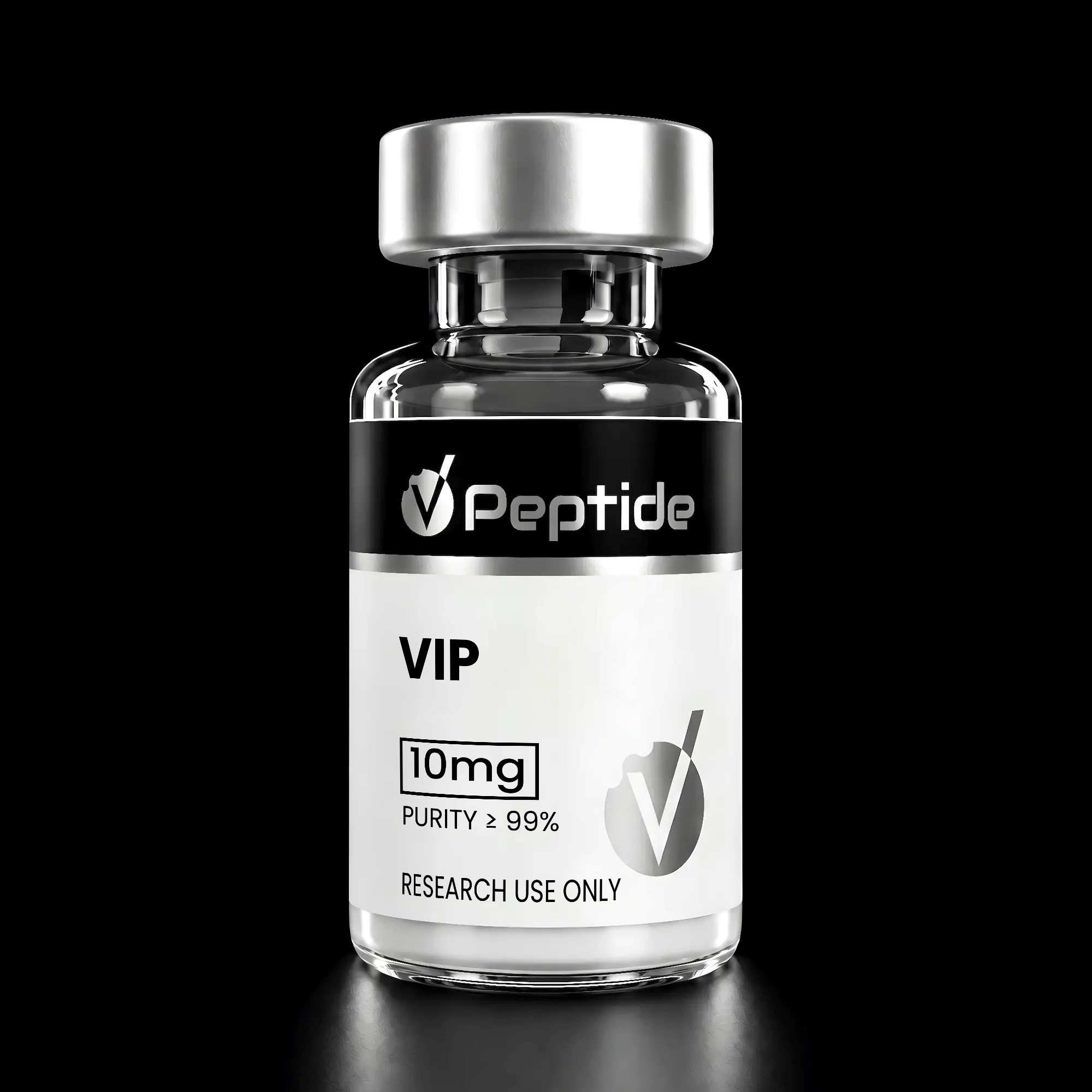
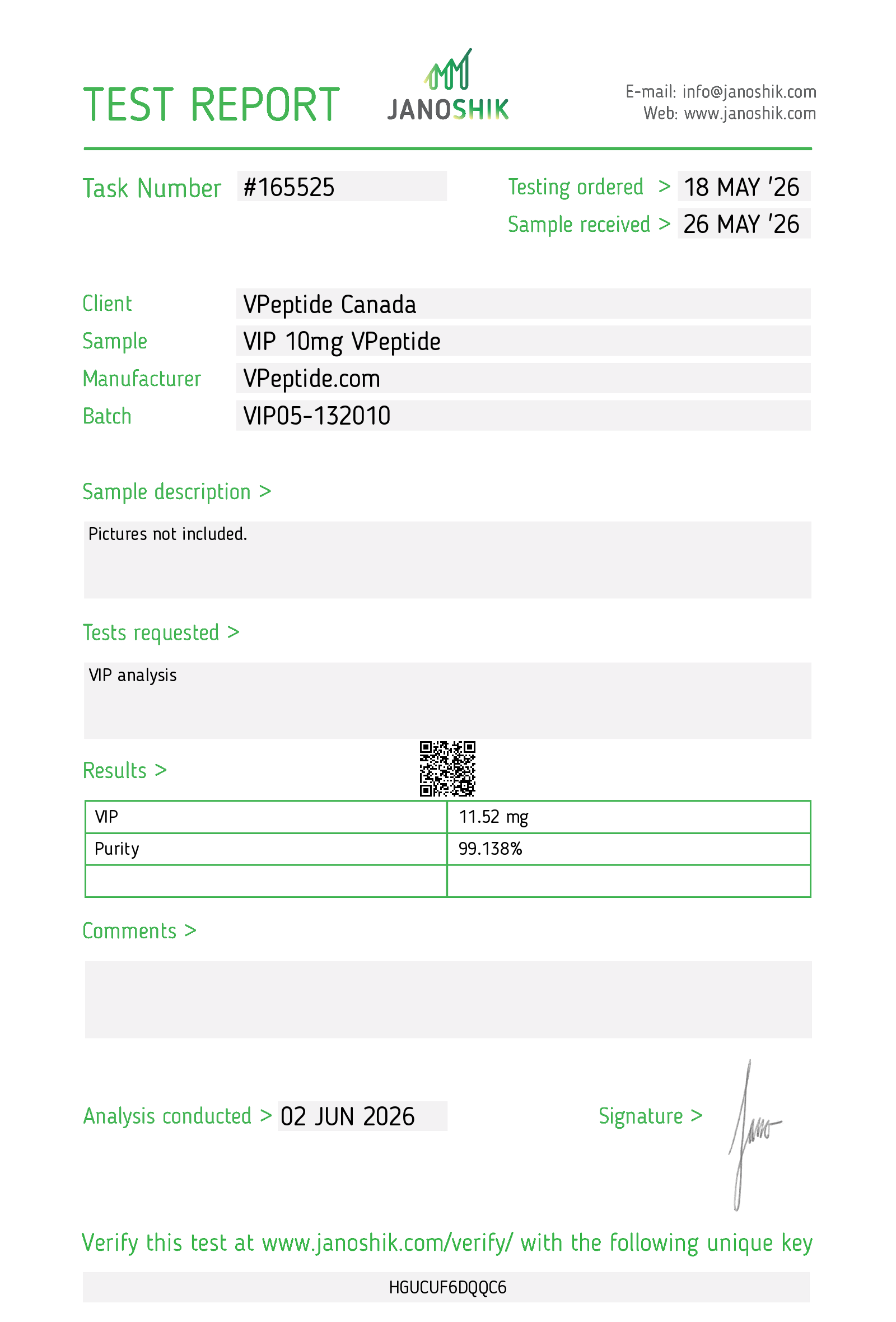
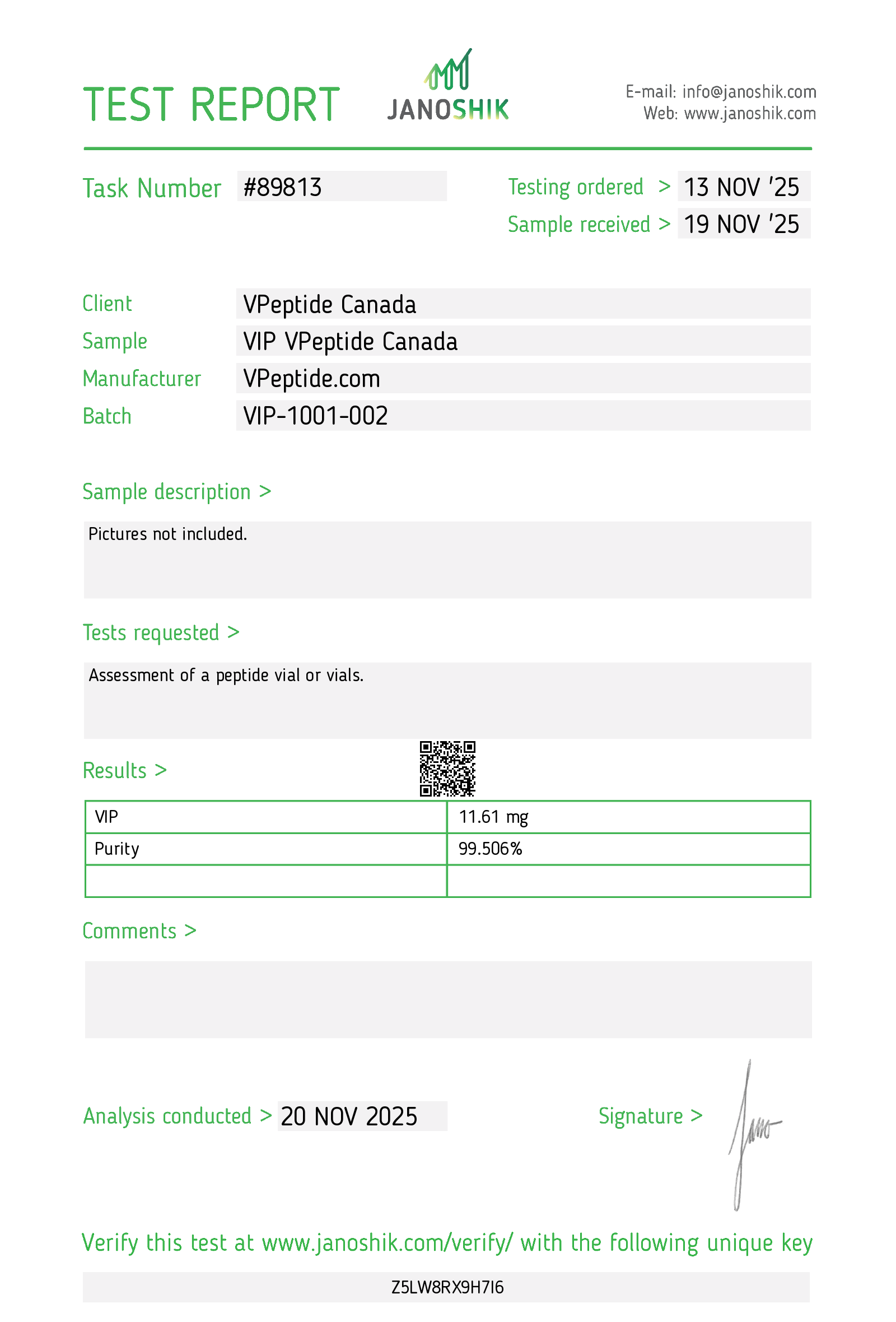
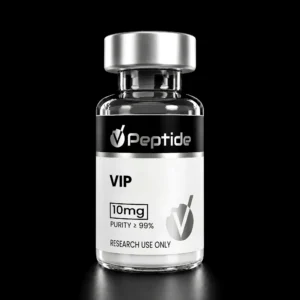
• Net Peptide Content: 10 mg per vial
• Quantity: 1 vial
• Appearance: White to off-white lyophilizate
• Reconstitution: Bacteriostatic or sterile water (added by the end researcher)
• Purity: ≥99% by HPLC
• Identity: MS-verified (per COA)
• Storage: Protect from light
Identity Basics
• Compound: Vasoactive Intestinal Peptide (VIP)
• Synonyms: Vasoactive Intestinal Polypeptide; PHM-27-related peptide; HSDAVFTDNYTRLRKQMAVKKYLNSILN
• Class: Synthetic 28-amino-acid neuropeptide; secretin/glucagon peptide superfamily member; VPAC1/VPAC2 receptor agonist research compound
• Sequence: His-Ser-Asp-Ala-Val-Phe-Thr-Asp-Asn-Tyr-Thr-Arg-Leu-Arg-Lys-Gln-Met-Ala-Val-Lys-Lys-Tyr-Leu-Asn-Ser-Ile-Leu-Asn (HSDAVFTDNYTRLRKQMAVKKYLNSILN) — 28 amino acids, typically C-terminally amidated in the bioactive form
• Origin: First isolated from porcine intestine by Said and Mutt (1970, Karolinska Institute)
• Formula / M.W.: C147H237N43O45S, ~3325.8 g/mol
• CAS: 73325-26-5
⚠️ Disclaimer
- This product is intended for laboratory research use only.
- Not for human or veterinary use.
- Not approved for diagnostic, therapeutic, or medical applications.
- Handle using appropriate laboratory safety procedures and personal protective equipment.
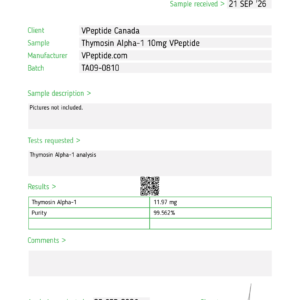
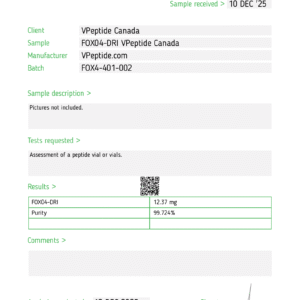
COA Verification Notice: Even if the vial label or product image states a certain concentration, always go by the COA for the true verified value. We reference the COA to determine the verified concentration and purity of each product, regardless of what the label or product image indicates.