Description
PNC-27 is a synthetic 32-amino-acid chimeric peptide originally developed by academic researchers at NYU School of Medicine and Weill Cornell Medical College (Ehrlich, Michl, and colleagues) as a research tool for p53 tumor suppressor protein-protein interaction studies. The peptide combines two functional domains: (1) a segment corresponding to p53 residues 12-26, which contains the HDM-2 (human double minute 2) binding recognition sequence — the region through which the p53 tumor suppressor interacts with its principal negative regulator HDM-2 — and (2) a membrane-residency peptide (MRP) segment adapted from HIV-1 gp41, which enables membrane insertion behavior in research models. The peptide has been extensively investigated in published academic research literature for HDM-2 protein-protein interaction pharmacology, membrane-active peptide chemistry, and p53 pathway cell biology research. This compound is offered strictly as a research tool for laboratory studies of p53/HDM-2 pathway biochemistry, protein-protein interaction pharmacology, and membrane-active peptide chemistry.
Benefits (Research Focus)
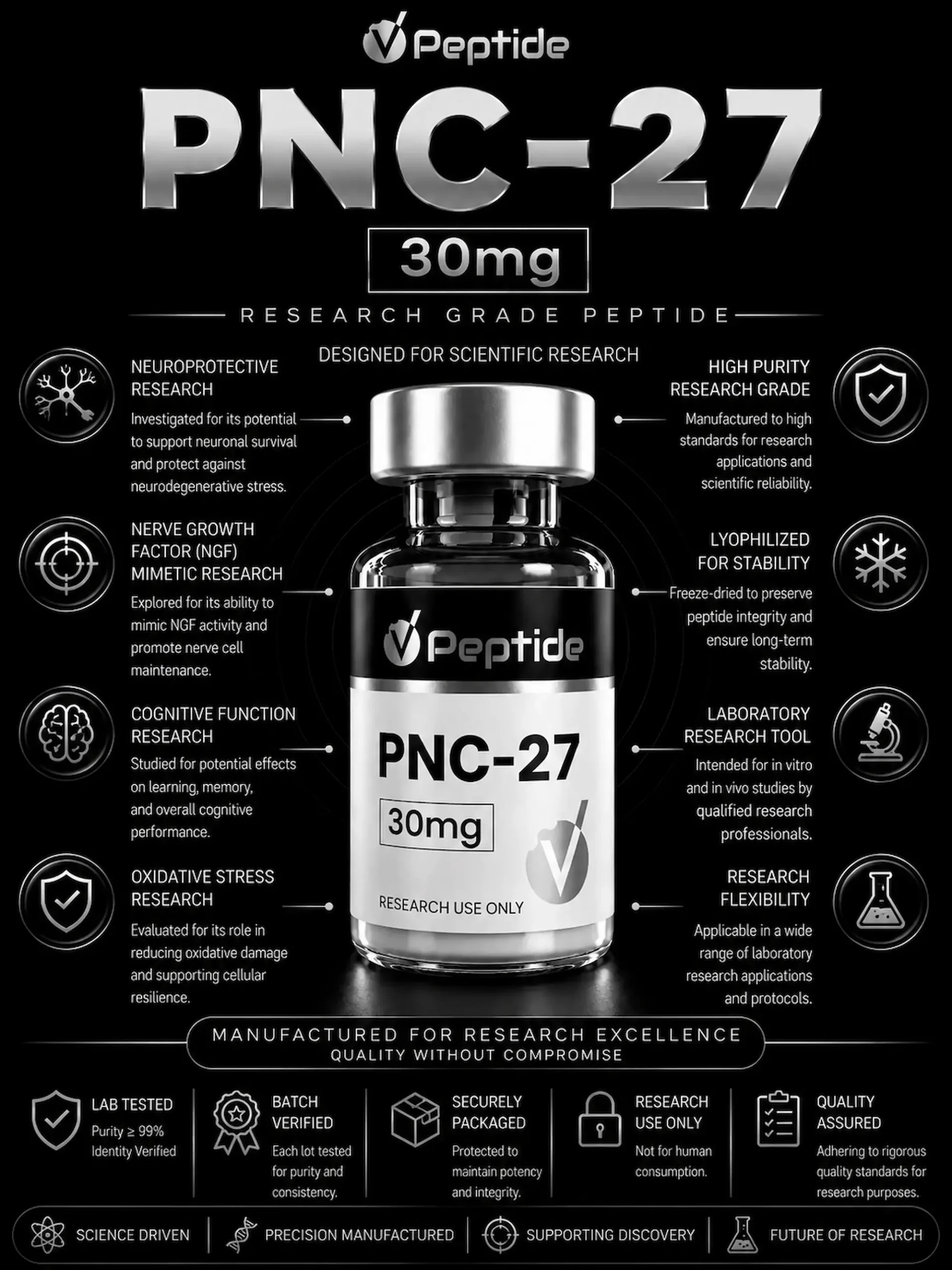
• p53 / HDM-2 protein interaction research — studied as a research tool for p53 tumor suppressor-HDM-2 protein-protein interaction pharmacology
• Chimeric peptide chemistry research — investigated as a two-domain chimeric peptide combining p53(12-26) recognition sequence with a membrane-residency peptide segment
• Membrane-active peptide research — explored for membrane insertion and membrane pharmacology in cell research models
• Protein-protein interaction SAR — examined for structure-activity relationships of p53-derived peptide sequences
• Cell biology research tool — researched for cell biology endpoints in academic cell research models (Ehrlich, Michl, and NYU/Weill Cornell research groups)
What Researchers Look At
• p53 / HDM-2 protein-protein interaction binding affinity and pharmacology characterization
• Membrane insertion kinetics and lipid bilayer interaction biophysics
• Comparative research versus other p53-derived research peptide sequences
• Chimeric peptide domain-domain interaction stability and folding research
• Protein-protein interaction disruption research in academic cell research models
Quick Specs
• Form: Lyophilized white powder
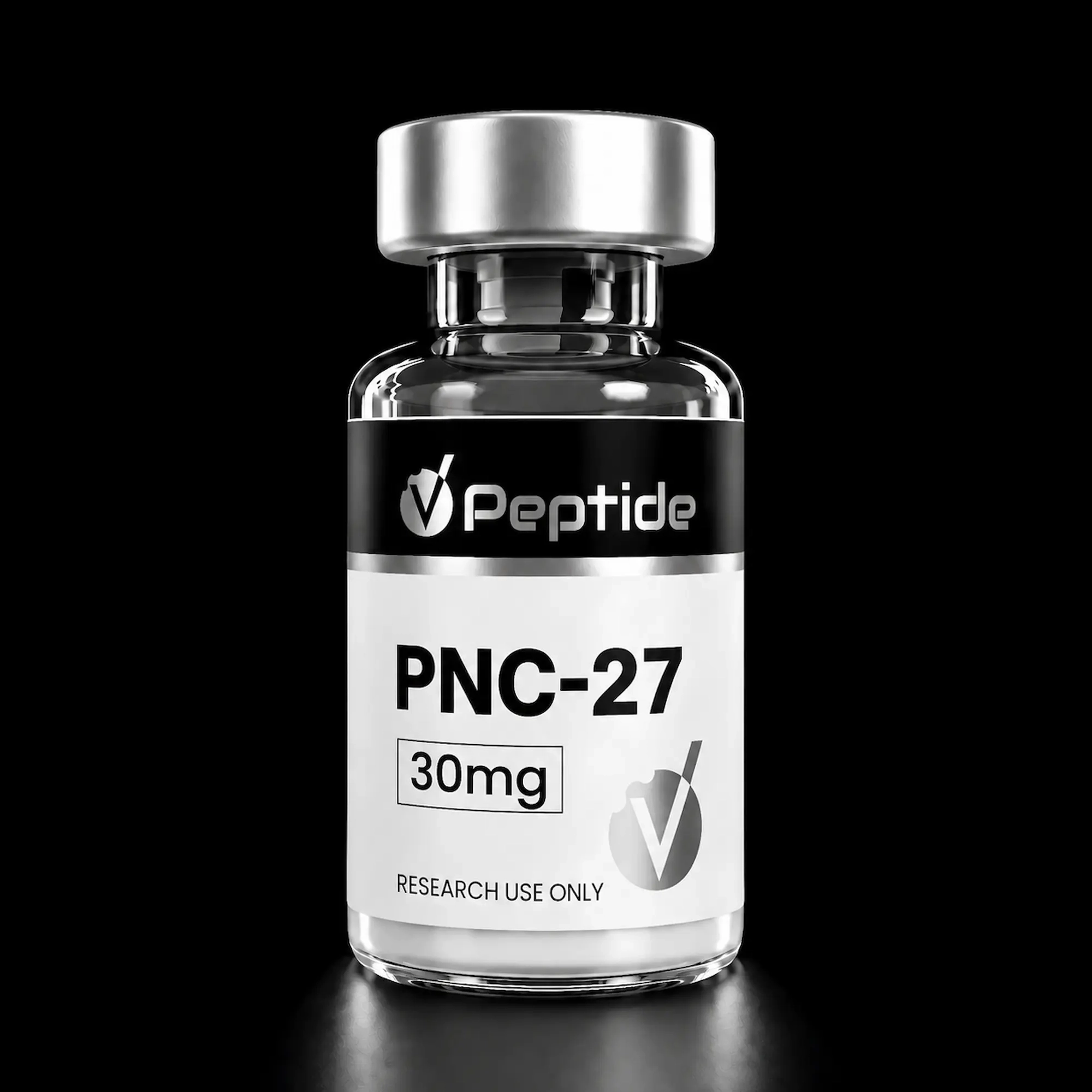
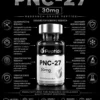
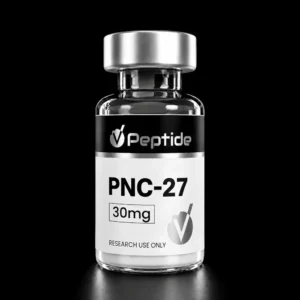
• Net Peptide Content: 30 mg per vial
• Quantity: 1 vial
• Appearance: White to off-white lyophilizate
• Reconstitution: Bacteriostatic or sterile water (added by the end researcher)
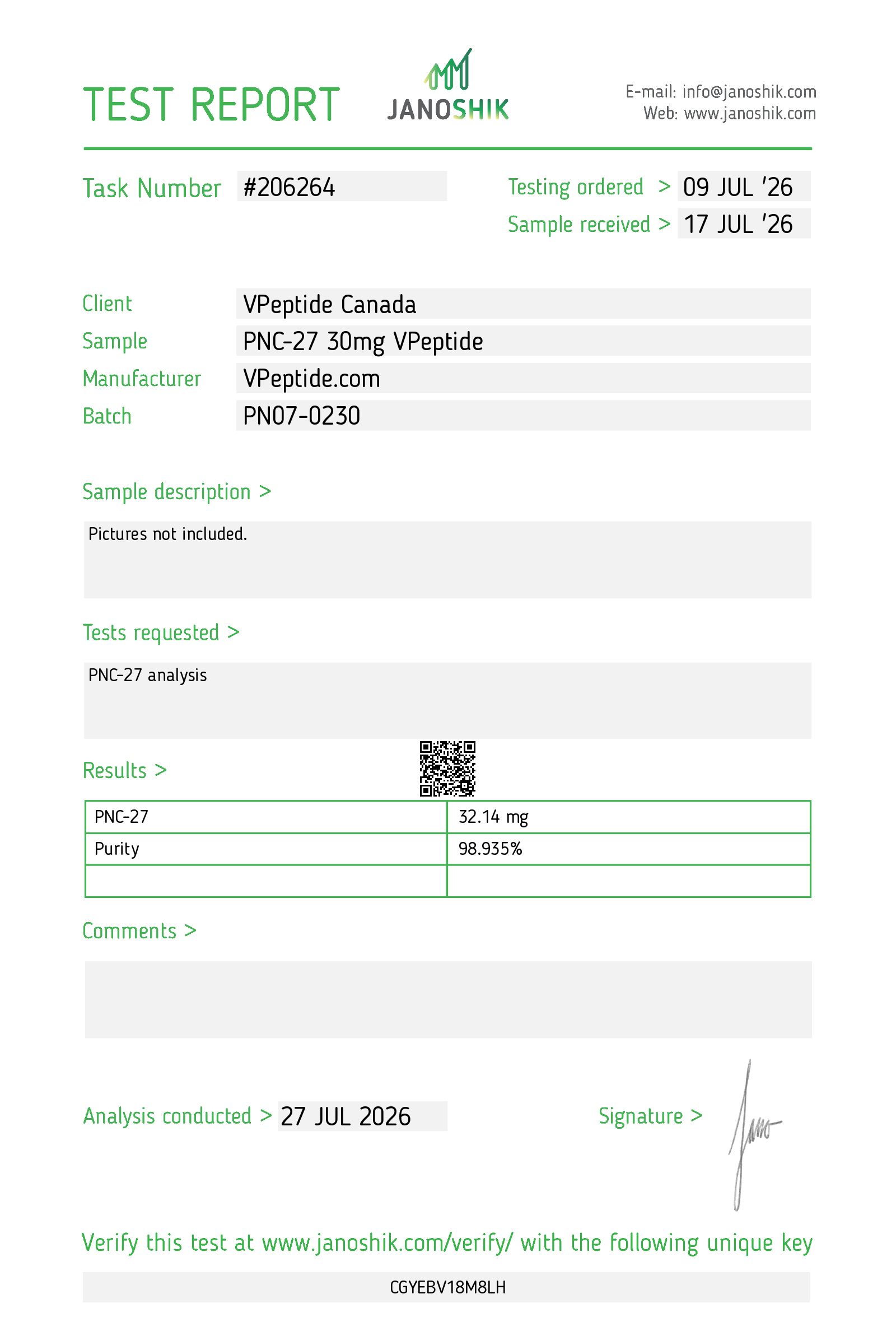
• Purity: ≥99% by HPLC
• Identity: MS-verified (per COA)
• Storage: Protect from light
Identity Basics
• Compound: PNC-27
• Synonyms: p53-MRP chimeric peptide; p53(12-26)-MRP; HDM-2 binding chimeric research peptide
• Class: Synthetic 32-amino-acid chimeric peptide; two-domain research peptide (p53-derived recognition segment + membrane-residency segment)
• Sequence: Pro-Pro-Leu-Ser-Gln-Glu-Thr-Phe-Ser-Asp-Leu-Trp-Lys-Leu-Leu-Lys-Lys-Trp-Lys-Met-Arg-Arg-Asn-Gln-Phe-Trp-Val-Lys-Val-Gln-Arg-Gly (PPLSQETFSDLWKLLKKWKMRRNQFWVKVQRG) — 32 amino acids
• Structural composition: N-terminal p53(12-26) segment containing the HDM-2 binding recognition sequence + C-terminal membrane-residency peptide (MRP) segment
• Origin: Synthetic chimeric research peptide developed by academic research groups at NYU School of Medicine and Weill Cornell Medical College (Ehrlich, Michl, and colleagues)
• Formula / M.W.: ~3960 g/mol (verify exact formula against batch COA)
• CAS: Verify against batch COA
⚠️ Disclaimer
- This product is intended for laboratory research use only.
- Not for human or veterinary use.
- Not approved for diagnostic, therapeutic, or medical applications by FDA, Health Canada, or any regulatory authority.
- Investigational academic research compound only — not evaluated for safety or efficacy in humans.
- Handle using appropriate laboratory safety procedures and personal protective equipment.
- This product is not intended for the treatment, cure, prevention, or diagnosis of any disease or medical condition. Individuals with any medical condition should consult qualified healthcare professionals rather than rely on research compounds.
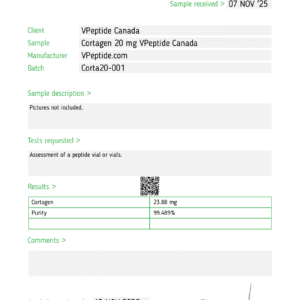
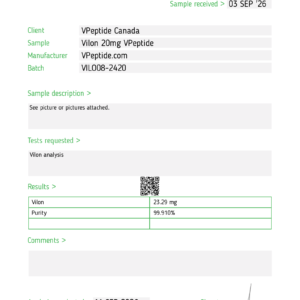
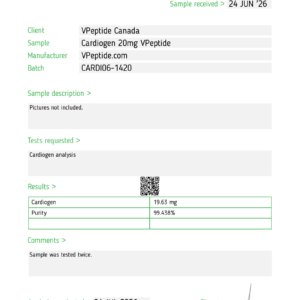
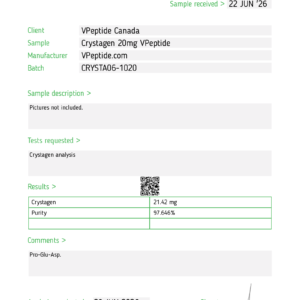
COA Verification Notice: Even if the vial label or product image states a certain concentration, always go by the COA for the true verified value. We reference the COA to determine the verified concentration and purity of each product, regardless of what the label or product image indicates.