Description
N-Acetyl Epithalon Amidate is a structurally modified analog of Epithalon (Ala-Glu-Asp-Gly / AEDG), the Khavinson-derived tetrapeptide bioregulator originally synthesized from pineal gland epithalamin extract. This modified analog incorporates two stabilizing chemical modifications relative to the parent peptide: N-terminal acetylation on the alanine residue (which protects against N-terminal aminopeptidase cleavage) and C-terminal amidation on the glycine residue (which protects against carboxypeptidase cleavage). Together, these modifications are reported to confer enhanced enzymatic stability and extended plasma half-life compared to unmodified Epithalon. The compound is investigated in preclinical research as a structurally optimized version of the parent AEDG peptide for telomerase pathway research, circadian gene expression studies, and comparative pharmacokinetics versus standard Epithalon. As a less commonly characterized analog with limited Western research literature, N-Acetyl Epithalon Amidate is primarily of interest to researchers conducting structure-activity relationship (SAR) studies of modified Khavinson short-peptide bioregulators.
Benefits (Research Focus)
• Enhanced peptide stability — studied for resistance to aminopeptidase and carboxypeptidase enzymatic degradation
• Telomerase pathway research — investigated for hTERT gene expression in cell culture models (analogous to parent Epithalon)
• Circadian gene expression — explored for BMAL1, CLOCK, PER, CRY pathway endpoints in chronobiology research
• SIRT1 / FOXO pathway research — examined for downstream sirtuin and forkhead transcription factor signaling
• SAR comparator — researched alongside standard Epithalon and other Khavinson analogs for structure-activity studies
What Researchers Look At
• Comparative pharmacokinetics and half-life versus unmodified Epithalon (AEDG)
• Telomerase (hTERT) expression and enzymatic activity in fibroblast and stem cell models
• Mitochondrial membrane potential and oxidative stress markers in cellular research
• SIRT1, FOXO, and other longevity-associated gene expression panels
• Resistance to plasma peptidase cleavage versus the parent unmodified tetrapeptide
Quick Specs
• Form: Lyophilized white powder
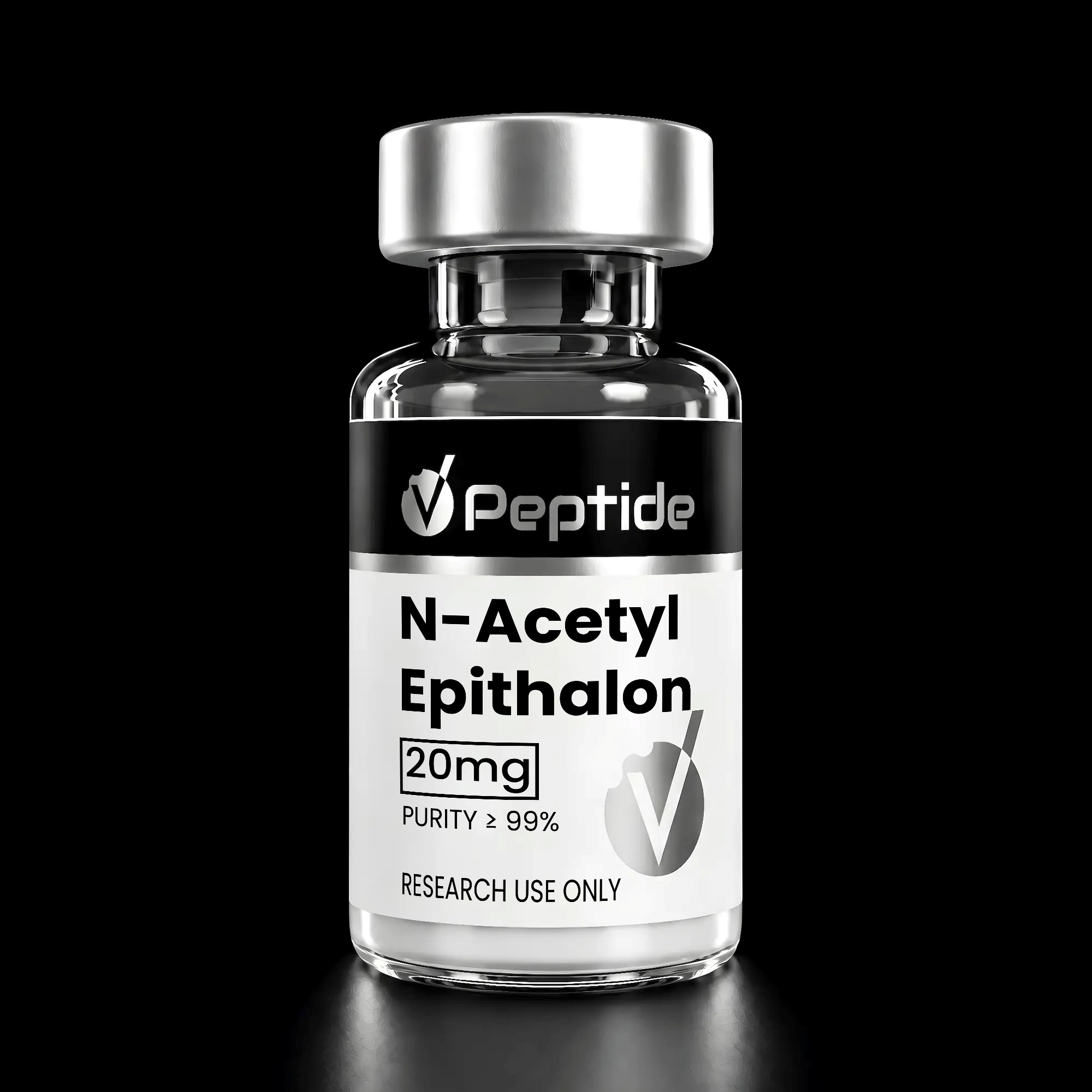
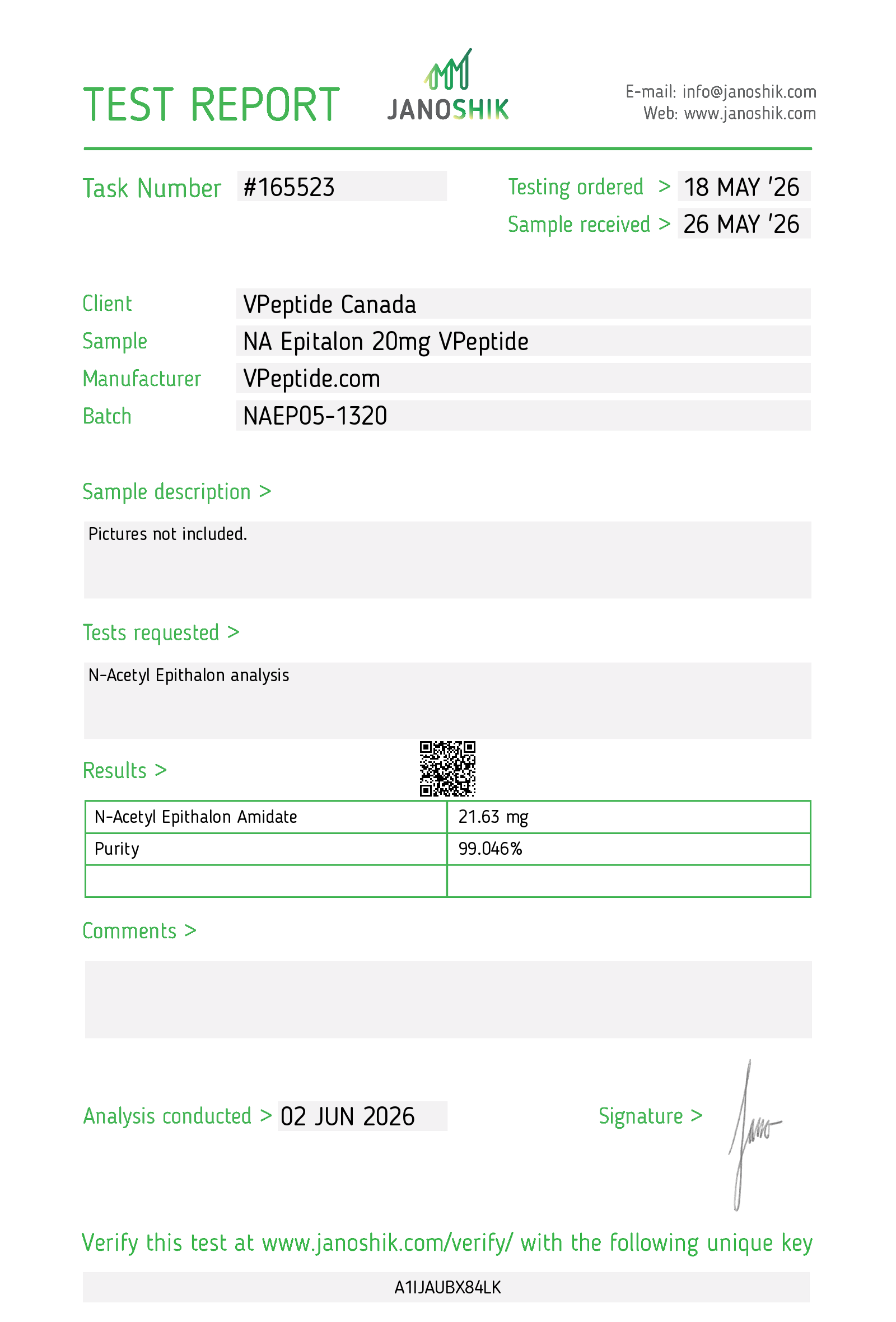
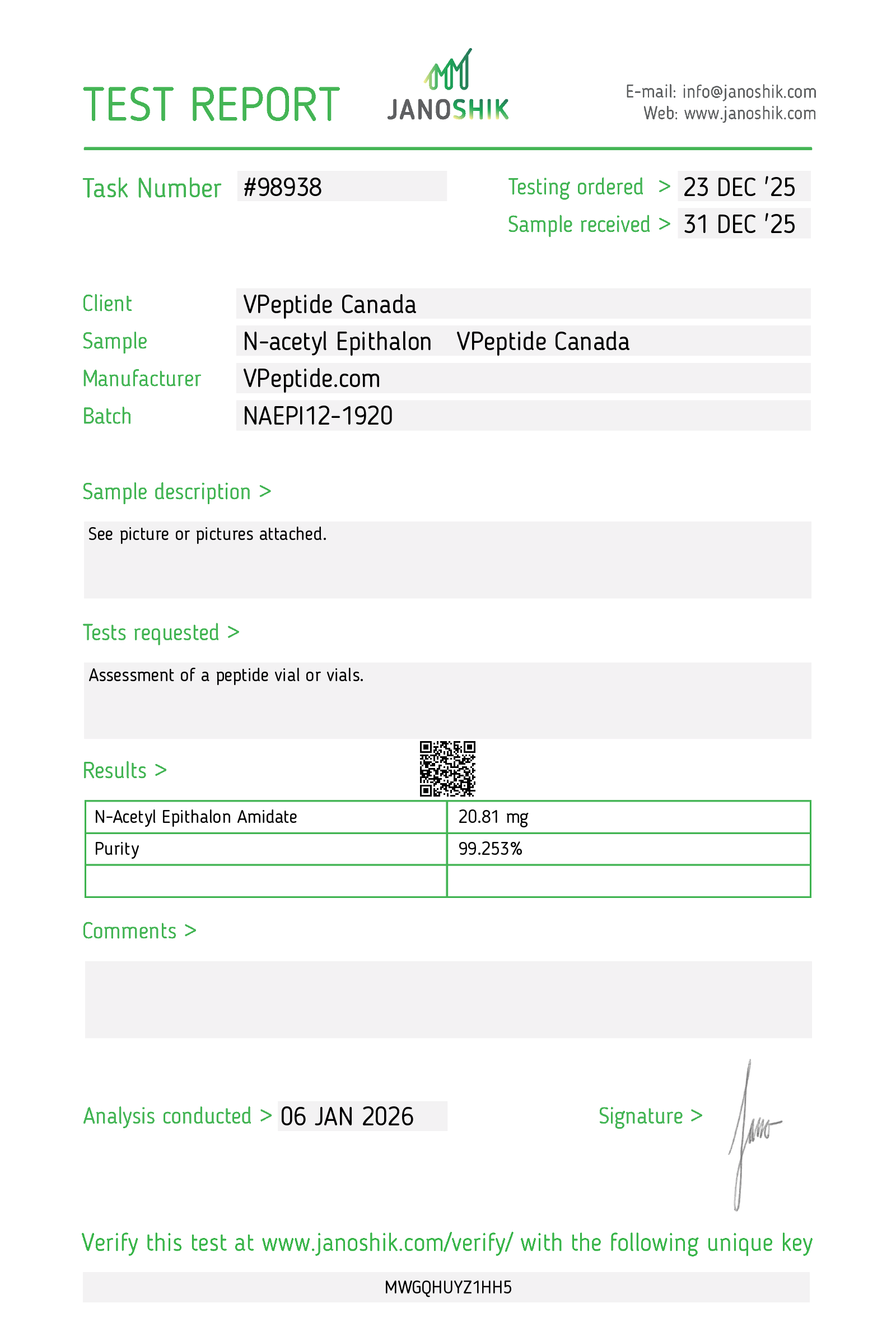
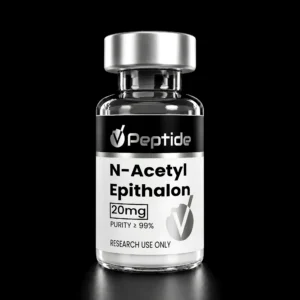
• Net Peptide Content: 20 mg per vial
• Quantity: 1 vial
• Appearance: White to off-white lyophilizate
• Reconstitution: Bacteriostatic or sterile water (added by the end researcher)
• Purity: ≥99% by HPLC
• Identity: MS-verified (per COA)
• Storage: Protect from light
Identity Basics
• Compound: N-Acetyl Epithalon Amidate
• Synonyms: N-Ac-AEDG-NH₂; Acetylated Epithalon Amide; N-Acetyl Epitalon Amidate
• Class: Modified Khavinson tetrapeptide analog; stabilized Epithalon (AEDG) derivative
• Parent compound: Epithalon (Ala-Glu-Asp-Gly / AEDG; CAS 307297-39-8)
• Modifications: N-terminal acetylation; C-terminal amidation (for enzymatic stability)
• Formula / M.W.: C38H59N11O15, ~945 g/mol (verify against batch COA — chemistry of this analog warrants direct MS verification)
• CAS: Not assigned (synthetic analog of parent compound CAS 307297-39-8)
⚠️ Disclaimer
- This product is intended for laboratory research use only.
- Not for human or veterinary use.
- Not approved for diagnostic, therapeutic, or medical applications.
- Handle using appropriate laboratory safety procedures and personal protective equipment.
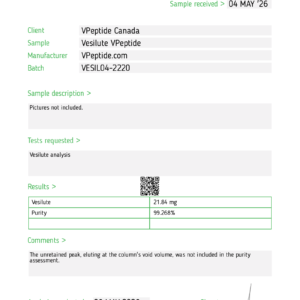
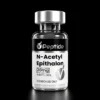
COA Verification Notice: Even if the vial label or product image states a certain concentration, always go by the COA for the true verified value. We reference the COA to determine the verified concentration and purity of each product, regardless of what the label or product image indicates.