Description
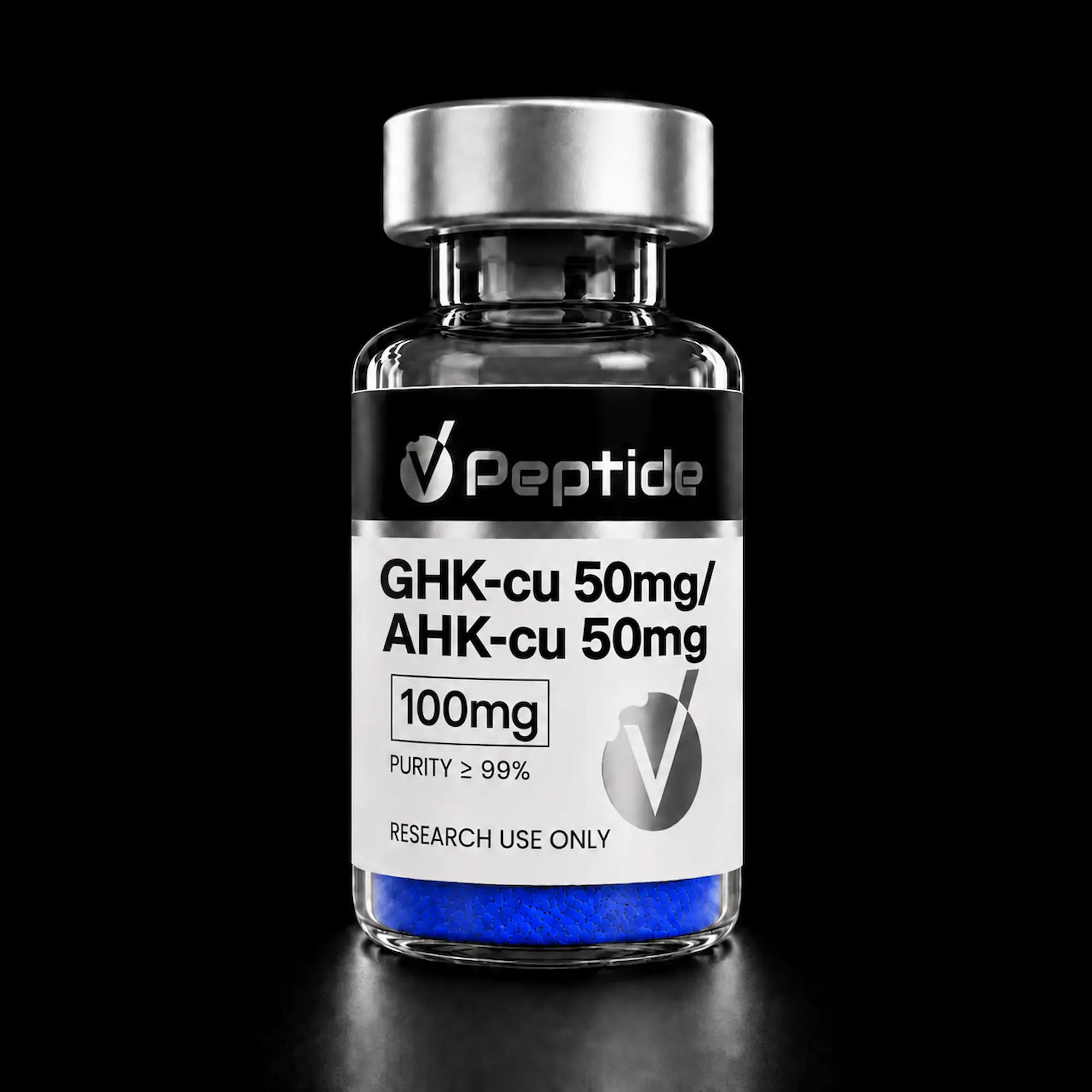
GHK-Cu + AHK-Cu Dual Copper Peptide Blend combines the two most extensively-characterized copper-binding tripeptides in a single lyophilized sterile research vial — 50 milligrams of GHK-Cu (Glycyl-L-Histidyl-L-Lysine copper(II) complex) plus 50 milligrams of AHK-Cu (Alanyl-L-Histidyl-L-Lysine copper(II) complex) for 100mg total dual copper peptide content per vial. GHK-Cu and AHK-Cu are structurally related copper tripeptides differing only by a single N-terminal residue substitution (glycine → alanine), making them ideal comparative research compounds for copper peptide SAR studies. GHK-Cu (identified by Loren Pickart in 1973 in human plasma) has been extensively investigated for wound repair chemistry, dermal remodeling research, and connective tissue research applications, while AHK-Cu is associated in cosmetic chemistry literature with hair follicle and dermal papilla research. Both peptides coordinate to divalent copper (Cu²⁺) through the histidine imidazole and N-terminal amine, forming stable peptide-copper complexes with characteristic deep blue color. This 100mg dual-peptide lyophilized presentation is offered for laboratory research applications investigating combined copper peptide research, comparative GHK-Cu vs AHK-Cu SAR studies, copper coordination chemistry research, and copper tripeptide combined research applications.
Benefits (Research Focus)
• Combined copper peptide research — studied as a dual copper peptide combined lyophilized research format bringing both GHK-Cu and AHK-Cu into single sterile reconstitution
• Comparative copper peptide SAR — investigated for direct comparative research between GHK-Cu (glycine N-terminus) and AHK-Cu (alanine N-terminus) copper tripeptides
• Copper coordination chemistry — explored for Cu²⁺ binding properties and peptide-metal complex stability across two structurally-related copper tripeptides
• Skin + hair copper peptide research — examined for combined GHK-Cu (skin-focused research literature) + AHK-Cu (hair-focused research literature) research applications
• Sterile injectable research format — researched in sterile lyophilized combined vial format for research applications requiring sterile reconstitution
What Researchers Look At
• Direct comparative pharmacology between GHK-Cu and AHK-Cu in same experimental system
• Copper coordination chemistry and peptide-Cu²⁺ complex stability characterization for both peptides
• N-terminal glycine vs alanine substitution effects on copper peptide research endpoints
• Combined copper peptide reconstitution stability and pH sensitivity research
• Comparative research versus individual GHK-Cu and AHK-Cu vial formats for combined vs sequential administration research
Quick Specs
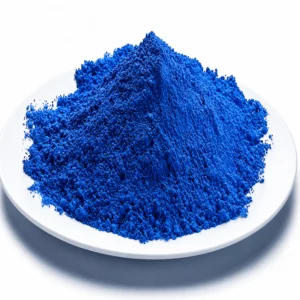
• Form: Lyophilized blue-violet powder (characteristic of copper peptide complexes)
• GHK-Cu Content: 50 mg per vial
• AHK-Cu Content: 50 mg per vial
• Total Peptide Content: 100 mg per vial
• Quantity: 1 vial
• Appearance: Deep blue to blue-violet lyophilizate (color confirms copper coordination)
• Reconstitution: Bacteriostatic or sterile water (added by the end researcher)
• Purity: ≥99% by HPLC (each peptide component)
• Identity: MS-verified (per COA)
• Storage: Protect from light
Identity Basics — Component Peptides
• GHK-Cu: Glycyl-L-Histidyl-L-Lysine copper(II) complex; Gly-His-Lys-Cu²⁺; INCI Copper Tripeptide-1; C14H24CuN6O4, MW ~403.92 g/mol, CAS 89030-95-5
• AHK-Cu: Alanyl-L-Histidyl-L-Lysine copper(II) complex; Ala-His-Lys-Cu²⁺; INCI Copper Tripeptide-3; C15H26CuN6O4, MW ~417.95 g/mol
• Structural relationship: AHK-Cu is the alanine-substituted N-terminal analog of GHK-Cu (glycine → alanine at position 1); both share the His-Lys C-terminal dipeptide and Cu²⁺ coordination pattern
• Class: Dual synthetic copper-binding tripeptide blend; combined copper coordination complexes; comparative copper peptide research formulation
• Combination rationale: Two structurally-related copper tripeptides combined in single vial for combined and comparative copper peptide research
• Total copper peptide content per vial: 100 mg (50 mg GHK-Cu + 50 mg AHK-Cu)
⚠️ Disclaimer
- This product is intended for laboratory research use only.
- Not for human or veterinary use.
- Not approved for diagnostic, therapeutic, or medical applications.
- Handle using appropriate laboratory safety procedures and personal protective equipment.
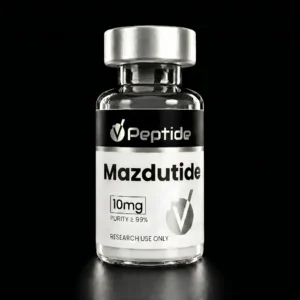
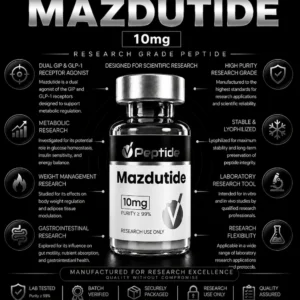
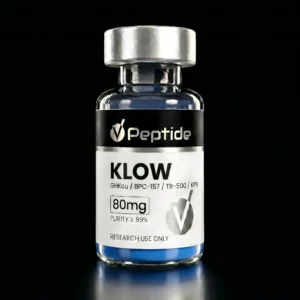
COA Verification Notice: Even if the vial label or product image states a certain concentration, always go by the COA for the true verified value. We reference the COA to determine the verified concentration and purity of each product, regardless of what the label or product image indicates.
Janoshik COA — Third-Party Testing
• [COA links for the GHK-Cu + AHK-Cu blend 100mg vial batch to be added once Janoshik testing is complete]