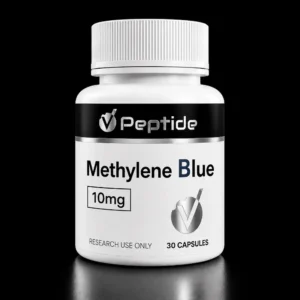
Description
Methylene Blue (methylthioninium chloride) is a synthetic phenothiazinium salt originally developed as a textile dye in the late 1800s and subsequently identified as one of the earliest synthetic pharmaceutical compounds with defined biological activity. The compound has been extensively studied across academic and clinical research literature for redox cycling chemistry, mitochondrial electron transport chain research, MAO enzyme inhibition pharmacology, and NADH/NAD⁺ redox couple research. Methylene Blue is FDA-approved as an injectable pharmaceutical (ProvayBlue) for specific clinical indications and has decades of published research history across multiple fields. This 10mg oral capsule format is offered strictly for laboratory research applications investigating oral small-molecule redox chemistry, MAO enzyme pharmacology research, and comparative research versus other redox-cycling research compounds. The oral capsule format uses microcrystalline cellulose (MCC) as the standard capsule excipient in a gelatin capsule shell.
Benefits (Research Focus)
• Redox chemistry research — studied as one of the most characterized redox-cycling small molecules in the academic research literature
• Mitochondrial electron transport research — investigated for interactions with mitochondrial electron transport chain complexes and NADH/NAD⁺ redox couple research
• MAO enzyme pharmacology — explored as a potent monoamine oxidase inhibitor research compound (MAO-A and MAO-B)
• Comparative small-molecule research — examined alongside other redox-cycling research compounds for comparative SAR studies
• Oral small-molecule research format — researched in oral capsule format for comparative research versus other small-molecule research compounds
What Researchers Look At
• Redox cycling behavior and reversible reduction to leucomethylene blue in research models
• Mitochondrial electron transport chain interaction research (particularly complex I bypass chemistry)
• MAO-A and MAO-B enzyme inhibition affinity and selectivity research
• Comparative pharmacology versus other MAO inhibitor research compounds
• Heavy metal contamination screening (critical for pharmaceutical-grade versus industrial-grade material distinction)
Quick Specs
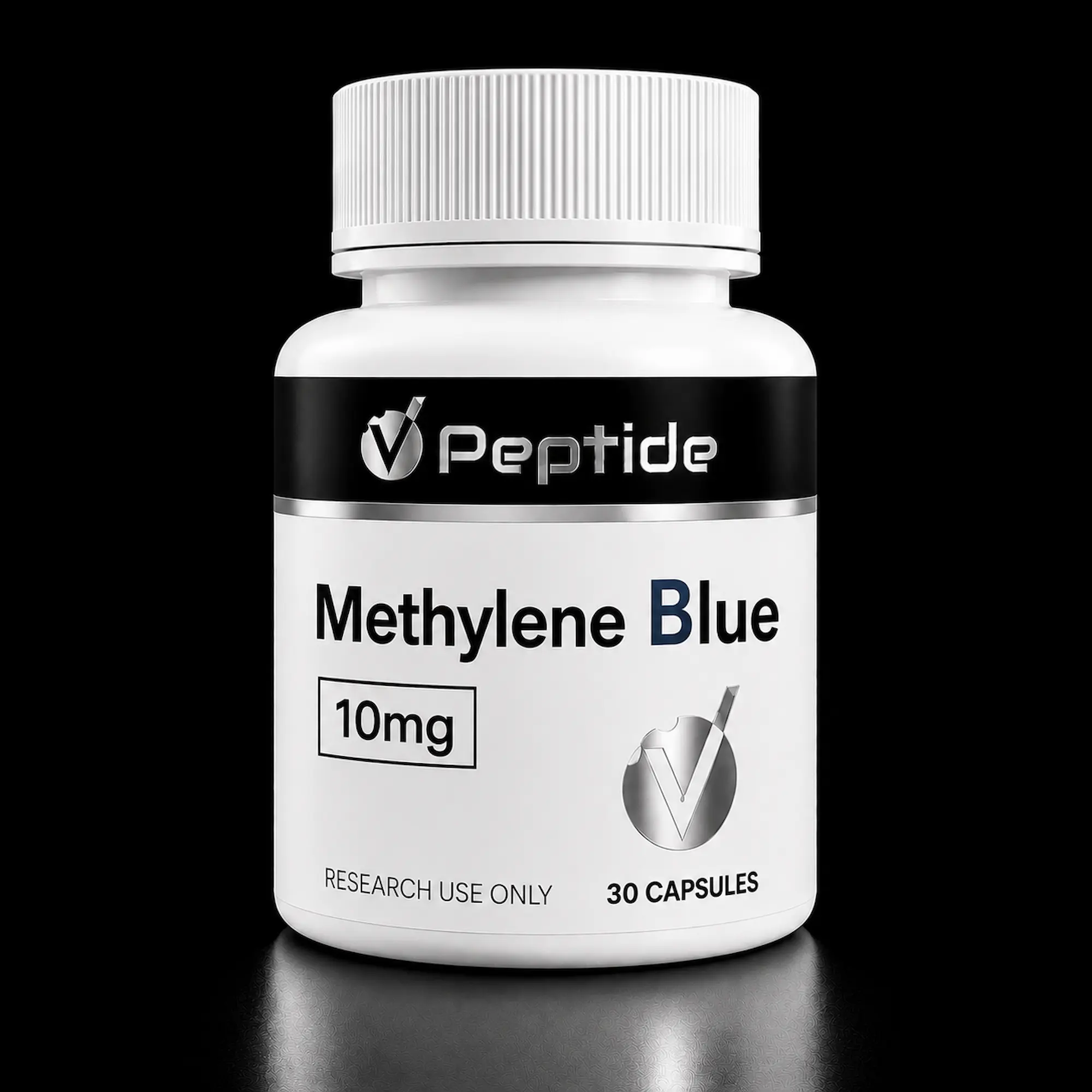
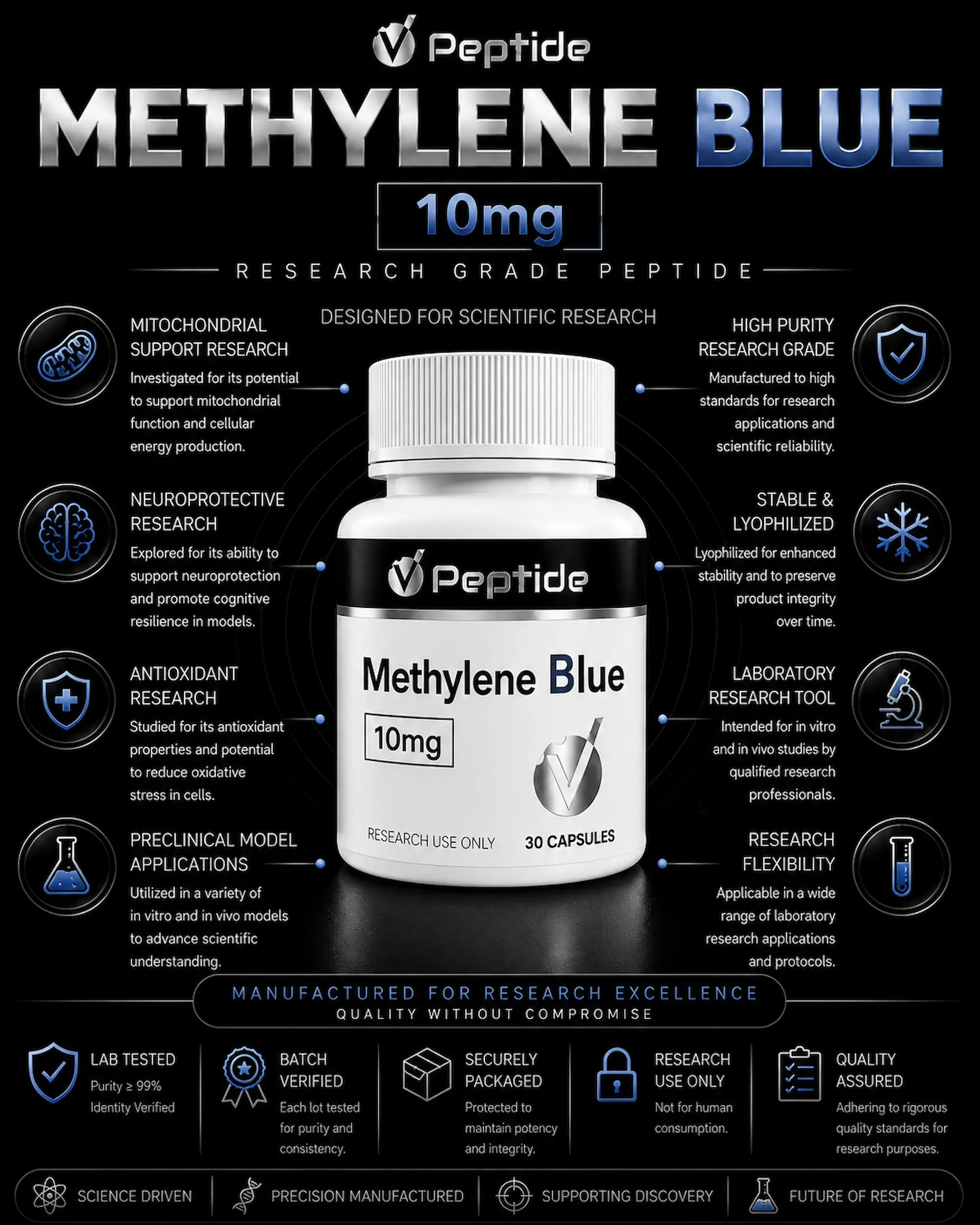
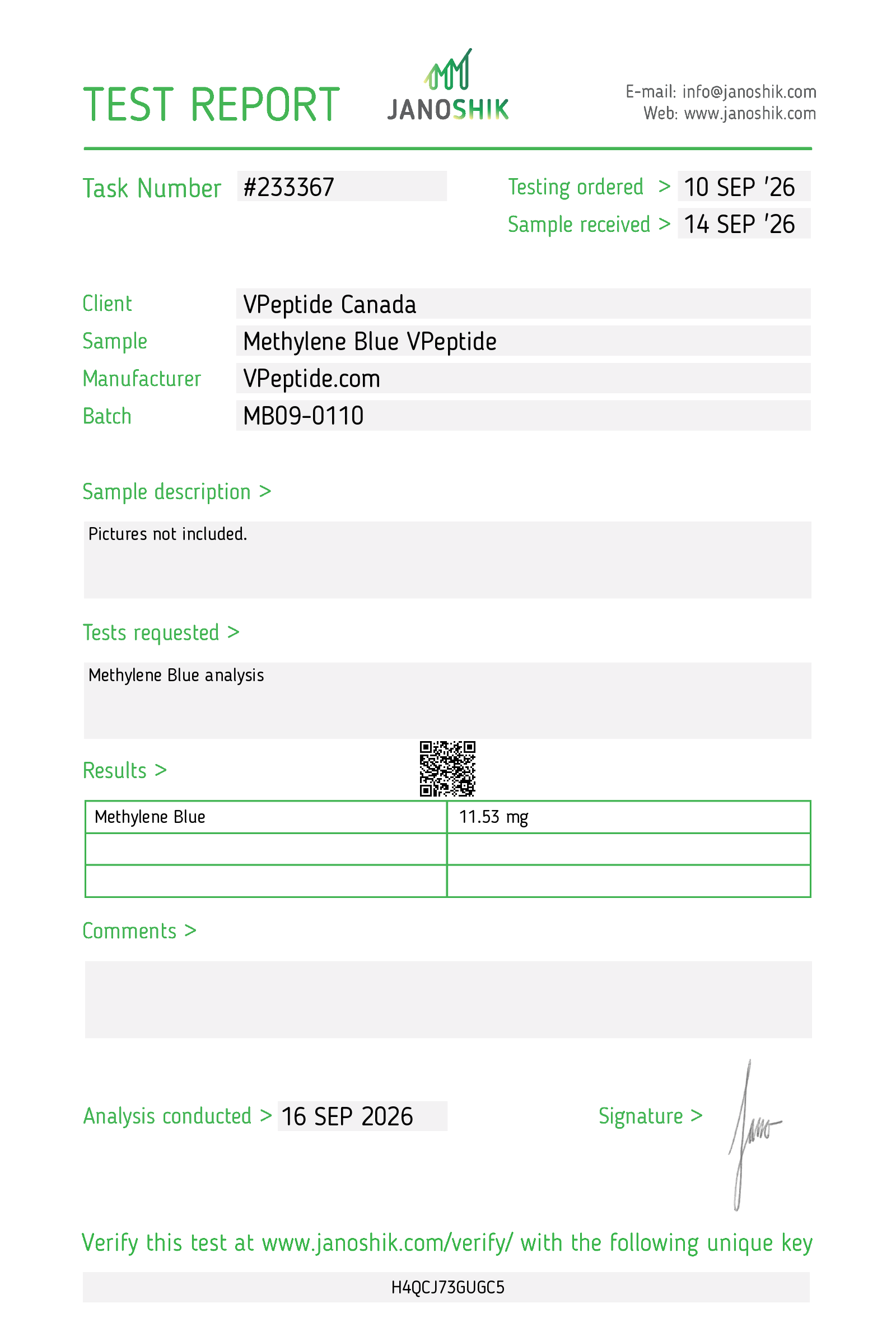
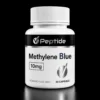
• Form: Gelatin capsule
• Strength: 10 mg methylene blue per capsule
• Quantity: 30 capsules per bottle
• Total Methylene Blue per Bottle: 300 mg
• Other ingredients: Microcrystalline cellulose (MCC, excipient), gelatin capsule shell
• Appearance: Standard gelatin capsule presentation containing characteristic dark blue-green methylene blue powder
• Purity: ≥99% (pharmaceutical grade)
• Identity: MS-verified (per COA)
• Storage: Protect from light
Identity Basics
• Compound: Methylene Blue (methylthioninium chloride)
• Synonyms: Methylthioninium chloride; MTC; basic blue 9; tetramethylthionine chloride; ProvayBlue (FDA-approved injectable form trade name reference)
• Class: Synthetic phenothiazinium salt; heterocyclic aromatic small molecule; redox-cycling dye; MAO inhibitor research compound
• Chemical structure: Phenothiazinium cation with methyl and amine substituents; chloride counterion
• Historical origin: Originally synthesized by Heinrich Caro (BASF) in 1876 as a textile dye; identified as a pharmaceutical research compound by Paul Ehrlich in the 1890s
• Formula: C16H18ClN3S (chloride form)
• Molecular Weight: ~319.85 g/mol (chloride form)
• CAS: 61-73-4
⚠️ Disclaimer
- This product is intended for laboratory research use only.
- Not for human or veterinary use.
- Not approved for diagnostic, therapeutic, or medical applications.
- Serotonin syndrome risk: Methylene blue is a potent monoamine oxidase inhibitor and has known interactions with serotonergic compounds including SSRIs, SNRIs, MAOIs, tricyclic antidepressants, and related compounds — with documented serotonin syndrome risk in clinical literature.
- Handle using appropriate laboratory safety procedures and personal protective equipment. Methylene blue causes intense blue staining of skin, surfaces, and materials.
COA Verification Notice: Even if the capsule label or product image states a certain concentration, always go by the COA for the true verified value. We reference the COA to determine the verified concentration and purity of each batch, regardless of what the label or product image indicates. For methylene blue specifically, we prioritize pharmaceutical-grade material with heavy metal contamination screening (as industrial-grade methylene blue may contain zinc, arsenic, or lead contamination from dye manufacturing).
Third-Party Testing
•https://verify.janoshik.com/tests/233367-Methylene_Blue_VPeptide_H4QCJ73GUGC5