Description
TB-500 (Fragment 17–23), also referred to as the “active site” of Thymosin Beta-4, is a short peptide sequence (LKKTETQ) believed to be responsible for much of TB-500’s regenerative potential. It is studied for its roles in wound healing, tissue repair, angiogenesis, and inflammation balance.
Benefits
- Wound healing — studied for accelerating closure and tissue regeneration.
- Cell migration — explored for promoting actin-binding activity essential in repair.
- Angiogenesis — linked to formation of new blood vessels in recovery models.
- Inflammation balance — studied for reducing excess inflammatory response.
- Targeted activity — represents the functional “core” of TB-500 in a smaller peptide fragment.
What researchers look at
- Fragment 17–23 (LKKTETQ) vs. full-length TB-500 activity.
- Binding to actin and promoting cytoskeletal reorganization.
- Preclinical studies on wound healing, angiogenesis, and regeneration.
- Potential for targeted applications with reduced peptide size.
Quick Specs
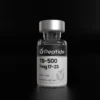
- Form: Lyophilized peptide
- Net per vial: 10 mg
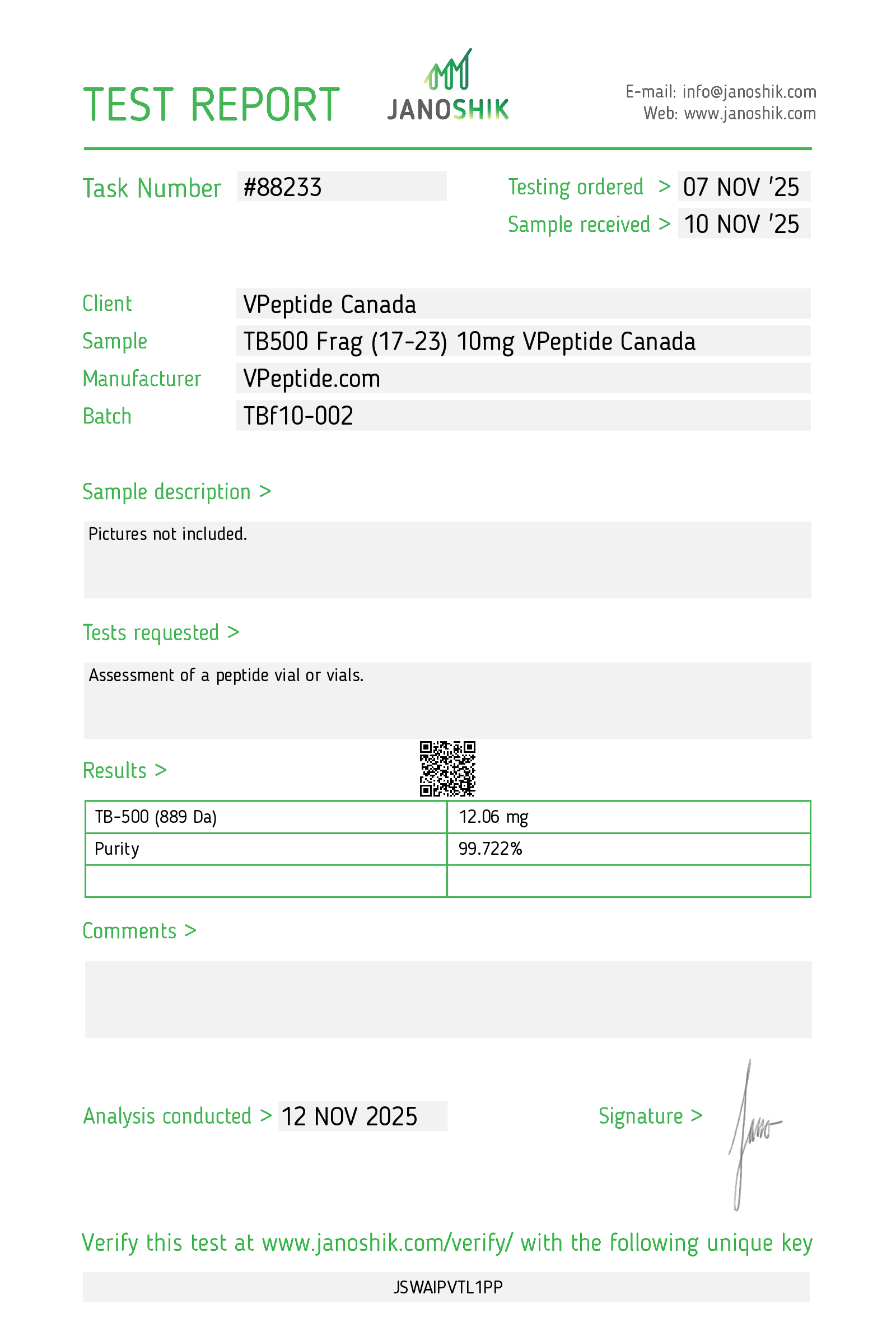
- Purity: ≥99% (HPLC)
- Identity: MS-verified (per COA)
- Storage: 2–8 °C, protect from light
Identity Basics
- Sequence: LKKTETQ
- Formula / M.W.: C36H66N10O13, ~889 Da
- CAS: 476014-70-7
Selected Research
- Thymosin Beta-4 peptide fragments and repair activity:
https://pubmed.ncbi.nlm.nih.gov/11336780/
- Role of LKKTETQ motif in actin binding:
https://pubmed.ncbi.nlm.nih.gov/16432249/
- Tissue regeneration and angiogenesis research:
https://pubmed.ncbi.nlm.nih.gov/19433835/
⚠️ Disclaimer
-
This product is intended for laboratory research use only.
-
Not for human or veterinary use.
-
Not approved for diagnostic, therapeutic, or medical applications.
-
Handle using appropriate laboratory safety procedures and personal protective equipment.