Description
LL-37 is the C-terminal 37-amino-acid peptide fragment of the human cathelicidin precursor protein hCAP-18 (human cationic antimicrobial protein, 18 kDa), released by proteinase 3 cleavage as the active mature peptide. LL-37 is the only cathelicidin found in humans and is one of the most extensively studied cationic antimicrobial peptides in the academic literature. The peptide adopts an amphipathic α-helical structure in membrane-mimicking environments, with cationic and hydrophobic faces that mediate interactions with anionic lipid surfaces. LL-37 has been investigated in preclinical academic research for cathelicidin receptor pharmacology, FPR2 / FPRL1 (formyl peptide receptor 2) binding, P2X7 receptor interactions, anionic membrane interaction biophysics, and TLR-dependent immune signaling pathway research. The compound is studied here as a research tool for cationic antimicrobial peptide chemistry, membrane biophysics, and structure-activity relationship (SAR) studies of cathelicidin-class peptides.
Benefits (Research Focus)
• Cathelicidin pharmacology research — studied as the human cathelicidin reference peptide for cationic antimicrobial peptide research
• FPR2 / FPRL1 receptor research — investigated for formyl peptide receptor 2 binding activity and downstream signaling
• Membrane biophysics research — explored for amphipathic α-helical structure-function studies and anionic lipid membrane interactions
• Cationic peptide SAR research — examined for structure-activity relationships of cationic antimicrobial peptide chemistry
• Comparative AMP research — researched alongside other cationic antimicrobial peptide research compounds for comparative studies
What Researchers Look At
• Cathelicidin receptor (FPR2/FPRL1) binding affinity and selectivity profiles
• Amphipathic α-helix formation and membrane interaction biophysics in lipid bilayer research models
• Anionic lipid versus zwitterionic lipid binding preference research
• P2X7 receptor and TLR-dependent signaling pathway endpoints in cell research models
• Comparative pharmacology versus other cathelicidin and cationic antimicrobial peptide research compounds
Quick Specs
• Form: Lyophilized white powder
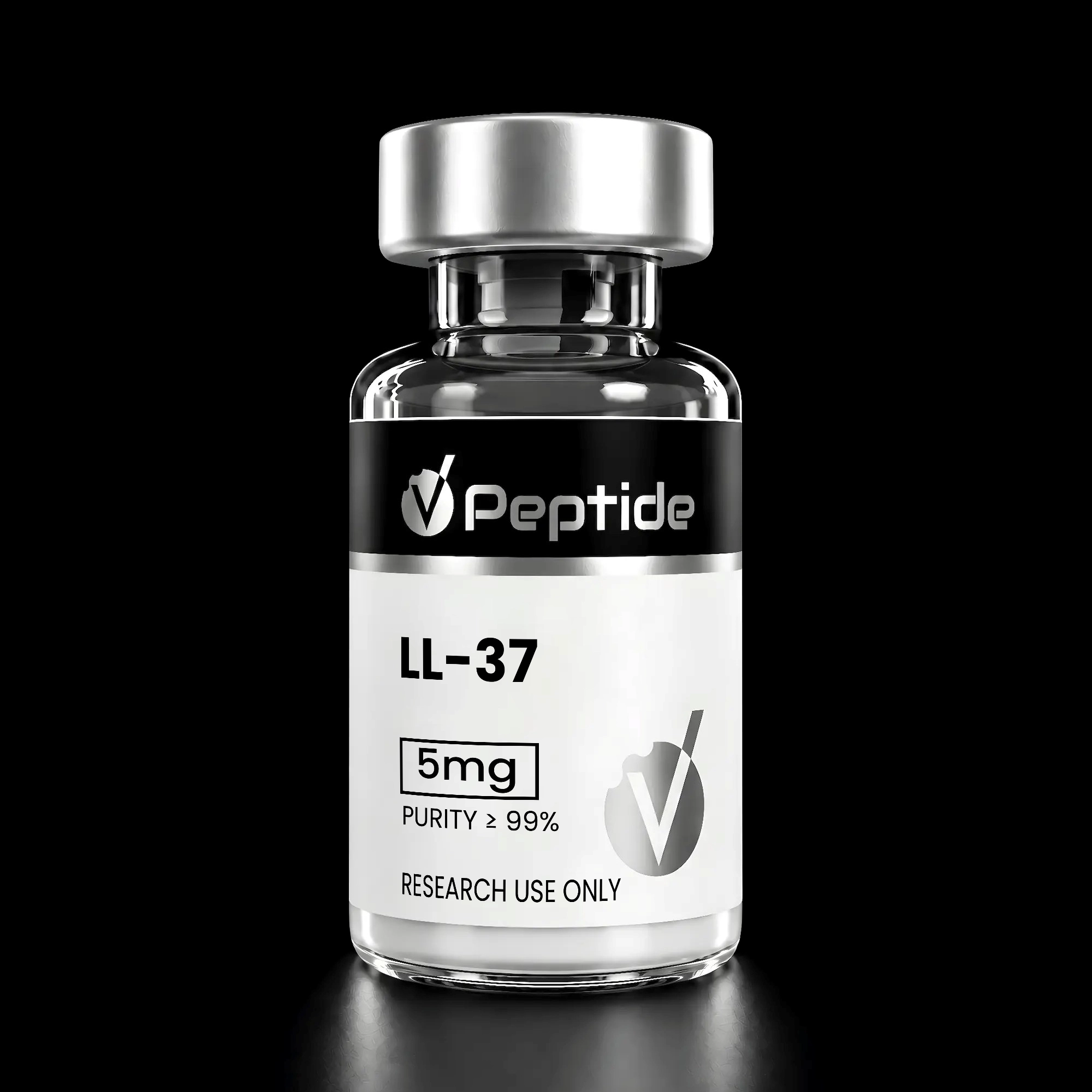
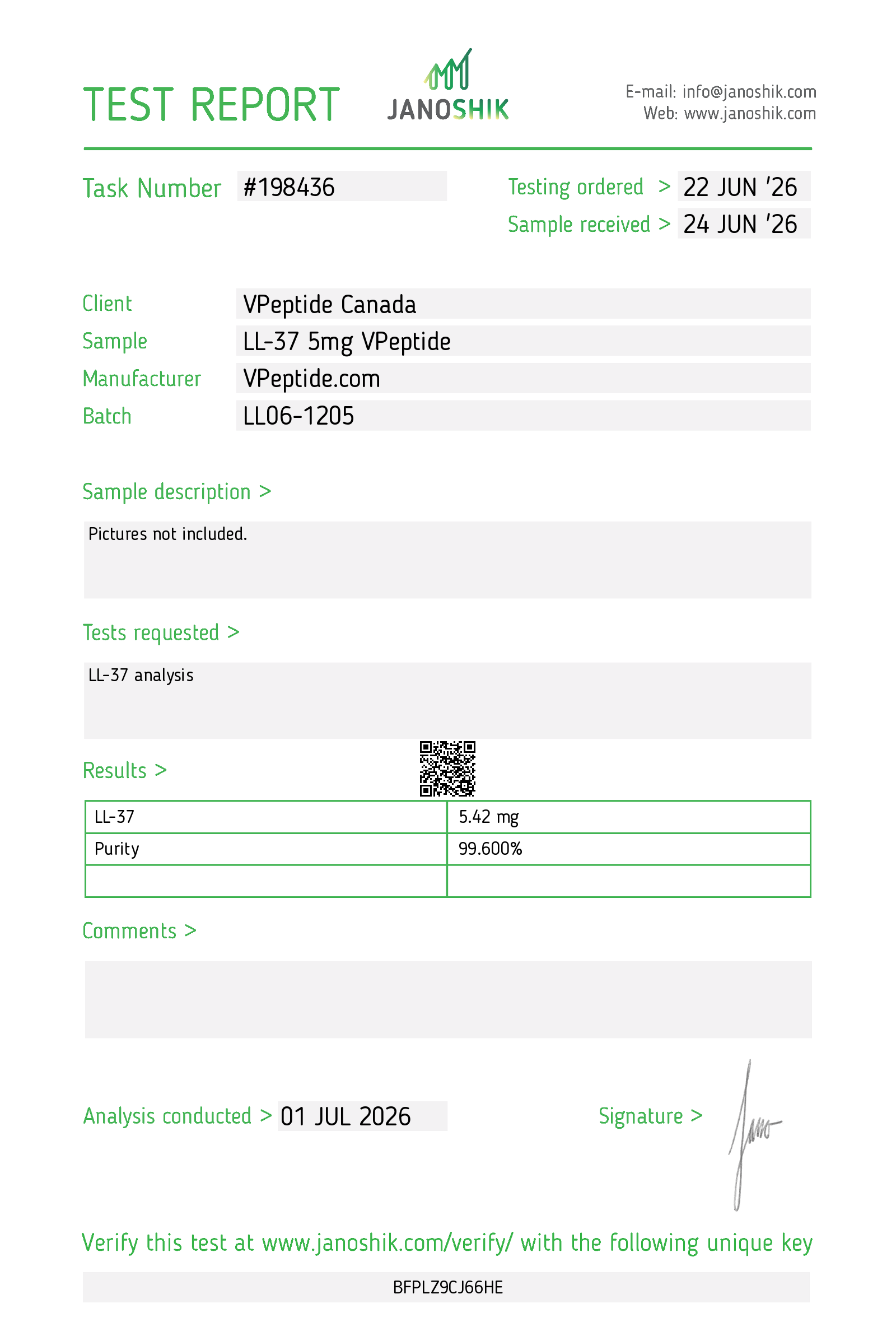
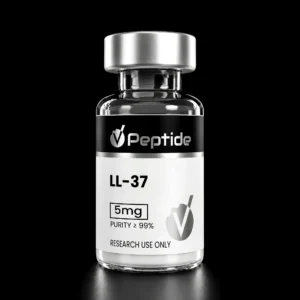
• Net Peptide Content: 5 mg per vial
• Quantity: 1 vial
• Appearance: White to off-white lyophilizate
• Reconstitution: Bacteriostatic or sterile water (added by the end researcher)
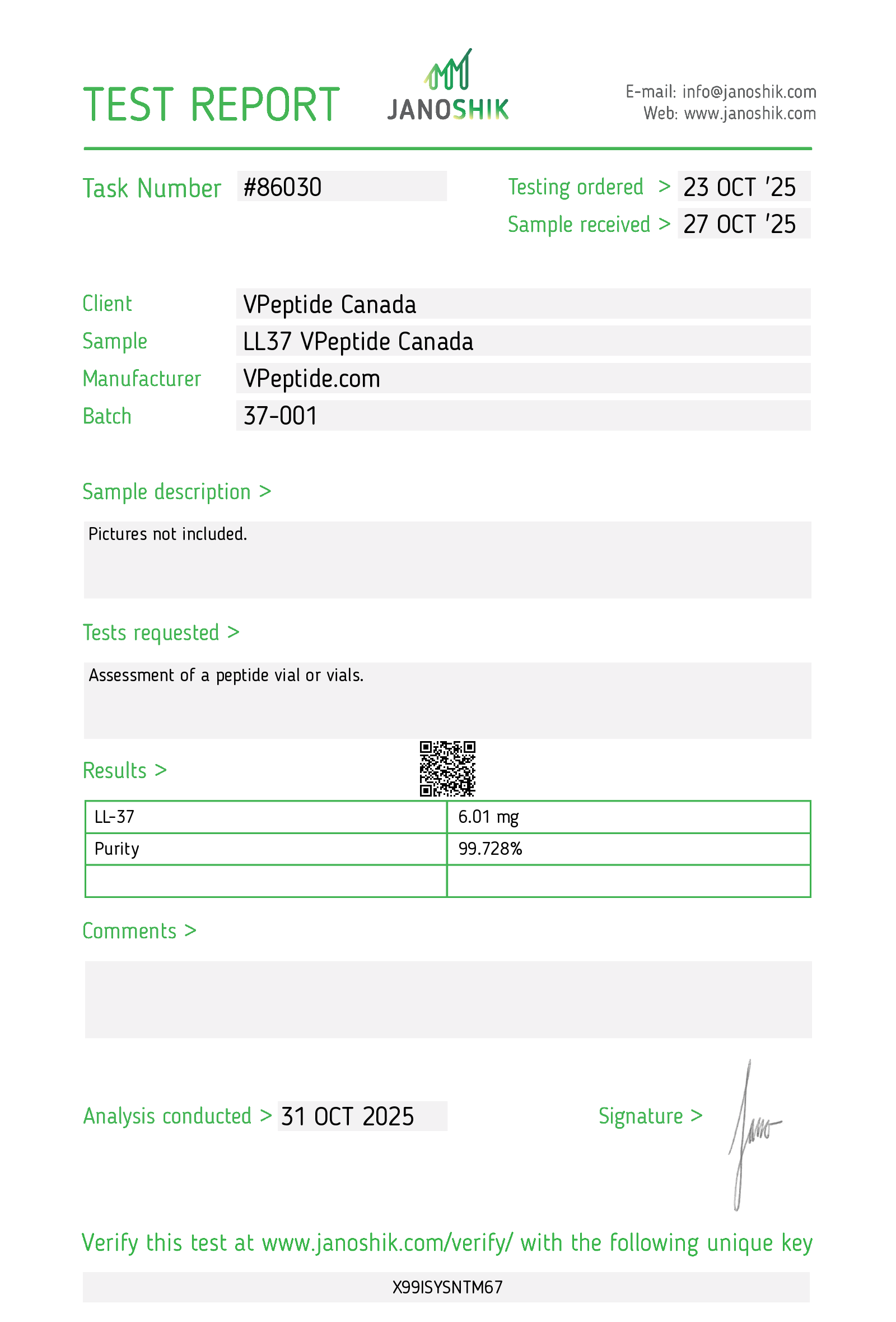
• Purity: ≥99% by HPLC
• Identity: MS-verified (per COA)
• Storage: Protect from light
Identity Basics
• Compound: LL-37 (human cathelicidin antimicrobial peptide)
• Synonyms: hCAP-18(134-170); cathelicidin antimicrobial peptide; CAMP gene product C-terminal fragment
• Class: Synthetic 37-amino-acid cationic peptide; human cathelicidin C-terminal fragment; α-helical amphipathic AMP
• Sequence: Leu-Leu-Gly-Asp-Phe-Phe-Arg-Lys-Ser-Lys-Glu-Lys-Ile-Gly-Lys-Glu-Phe-Lys-Arg-Ile-Val-Gln-Arg-Ile-Lys-Asp-Phe-Leu-Arg-Asn-Leu-Val-Pro-Arg-Thr-Glu-Ser (LLGDFFRKSKEKIGKEFKRIVQRIKDFLRNLVPRTES) — 37 amino acids
• Origin: C-terminal cleavage product of the human cathelicidin precursor hCAP-18 (CAMP gene)
• Formula / M.W.: ~4493.27 g/mol (verify exact formula against batch COA — published as approximately C205H340N60O53)
• CAS: 154947-66-7
⚠️ Disclaimer
- This product is intended for laboratory research use only.
- Not for human or veterinary use.
- Not approved for diagnostic, therapeutic, or medical applications.
- Handle using appropriate laboratory safety procedures and personal protective equipment.
COA Verification Notice: Even if the vial label or product image states a certain concentration, always go by the COA for the true verified value. We reference the COA to determine the verified concentration and purity of each product, regardless of what the label or product image indicates.