Description
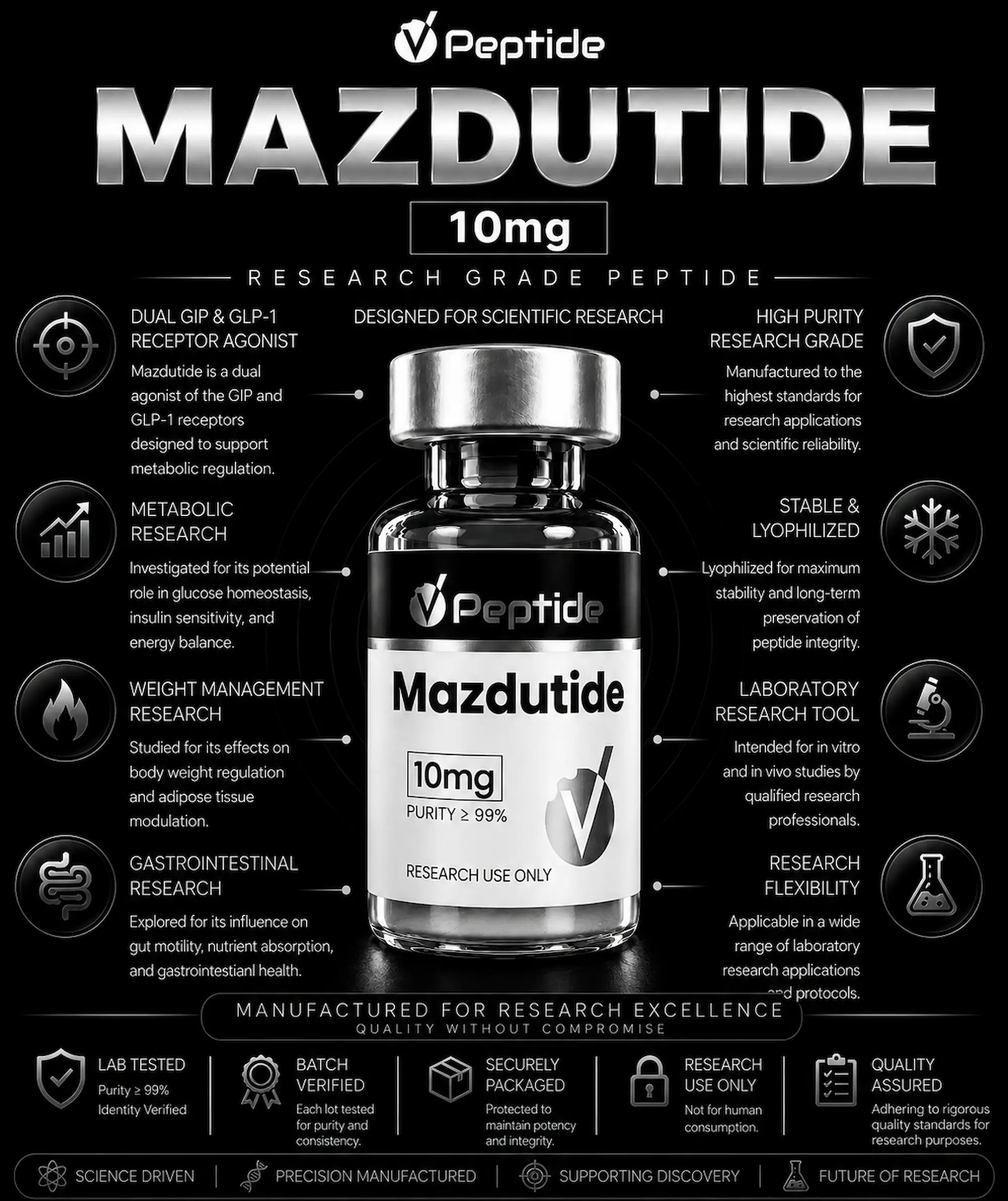
Mazdutide (IBI362 / LY3305677) is a synthetic 29-amino-acid peptide developed as a dual agonist at the glucagon-like peptide-1 (GLP-1) and glucagon receptors, originally derived from the oxyntomodulin scaffold (OXM3 in early development). The peptide incorporates a C20 fatty diacid moiety enabling reversible albumin binding and an extended pharmacokinetic profile compatible with once-weekly dosing. Developed jointly by Innovent Biologics and Eli Lilly, mazdutide is studied as a multi-receptor incretin compound that combines GLP-1 receptor–driven glycemic and satiety effects with glucagon receptor–mediated energy expenditure, with research interest in body composition, hepatic lipid metabolism, glycemic endpoints, and metabolic rate in obesity and metabolic disease models. It is positioned in the broader class of multi-incretin research peptides alongside tirzepatide (GLP-1/GIP) and retatrutide (GLP-1/GIP/glucagon).
Benefits (Research Focus)
• Dual receptor agonism — studied for simultaneous activation of GLP-1 and glucagon receptors with balanced biased agonism
• Glycemic control research — investigated for fasting glucose, HbA1c, and insulin sensitivity parameters in T2D models
• Body composition — examined for fat-mass and lean-mass partitioning in DIO and obesity models
• Energy expenditure — explored for glucagon-mediated thermogenic effects and metabolic rate endpoints
• Long-acting profile — C20 fatty diacid albumin-binding chemistry for extended half-life consistent with once-weekly research dosing
What Researchers Look At
• Receptor binding affinity and selectivity at GLP-1R vs GCGR
• cAMP activation curves in cell lines expressing each receptor subtype
• Food intake, body weight, and adipose-tissue change in DIO rodent models
• Hepatic lipid metabolism and liver fat fraction endpoints
• Comparative pharmacology versus tirzepatide, retatrutide, semaglutide, and other incretin analogs
Quick Specs
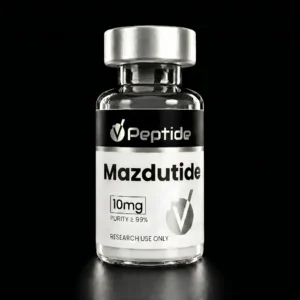
• Form: Lyophilized white powder
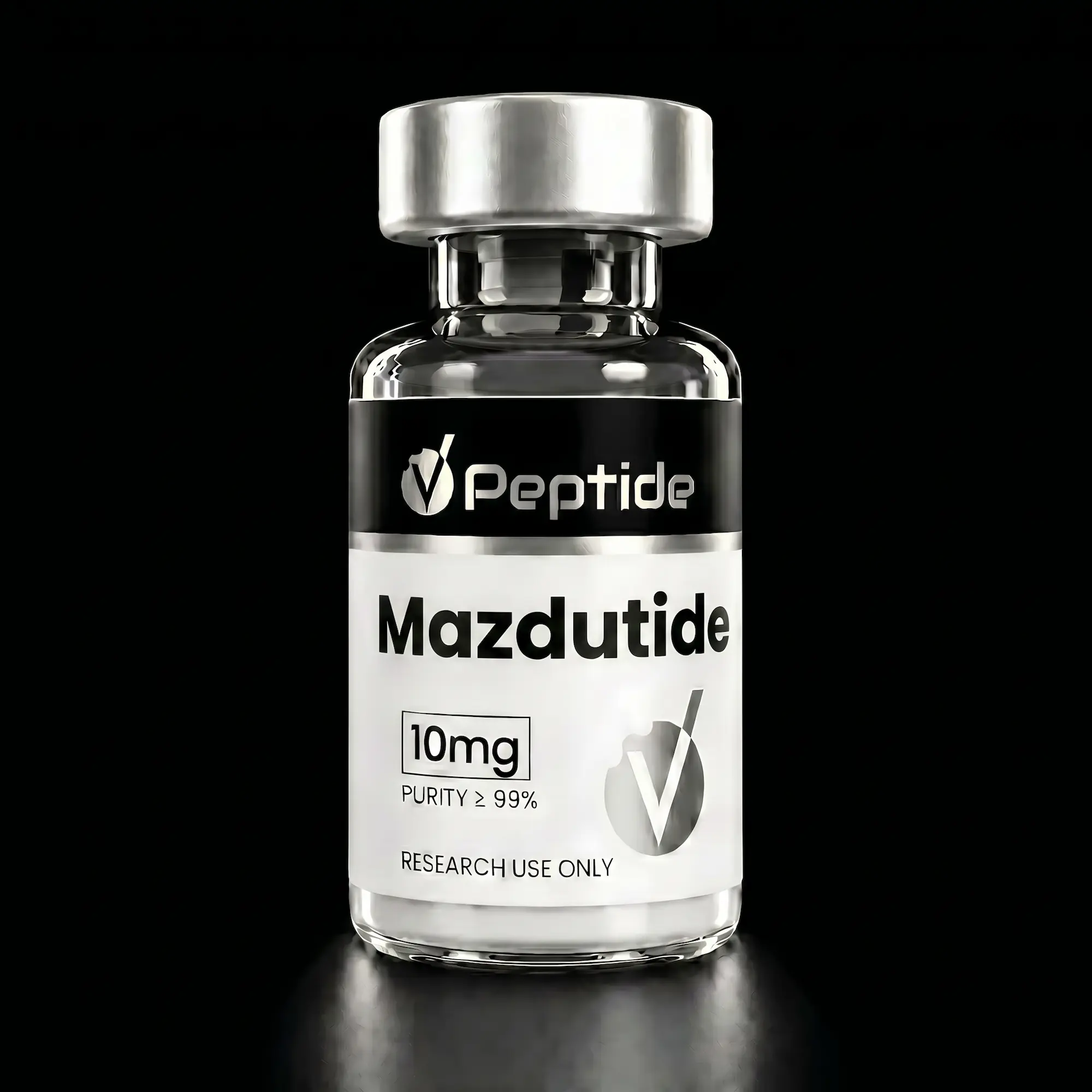
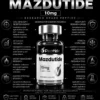
• Net Peptide Content: 10 mg per vial
• Quantity: 1 vial
• Appearance: White to off-white lyophilizate
• Reconstitution: Bacteriostatic or sterile water (added by the end researcher)
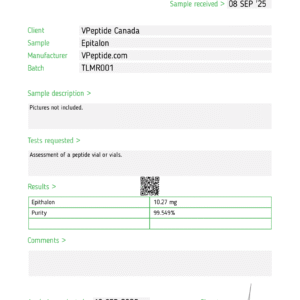
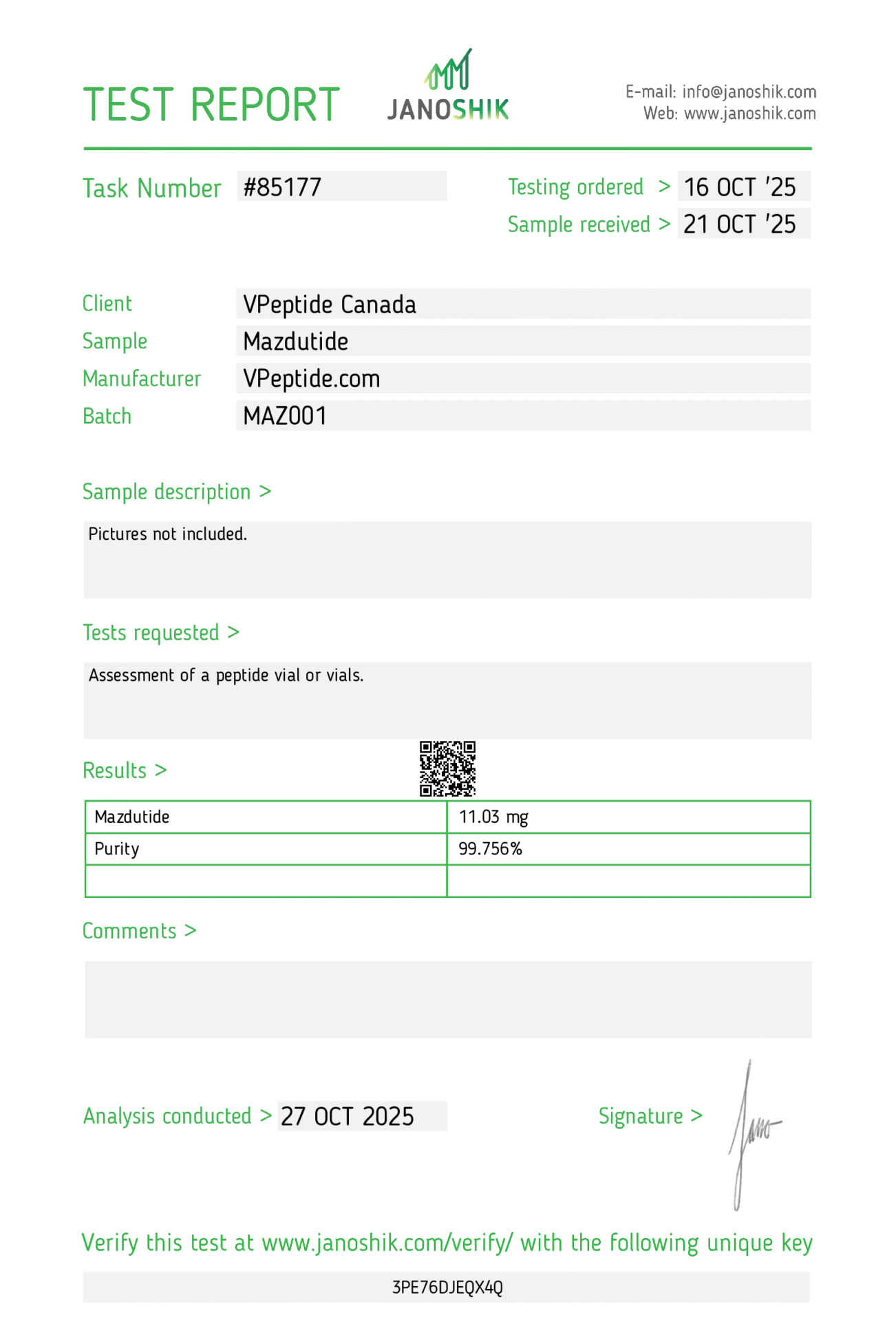
• Purity: ≥99% by HPLC
• Identity: MS-verified (per COA)
• Storage: Protect from light
Identity Basics
• Compound: Mazdutide
• Synonyms: IBI362; LY3305677; OXM3 (early development designation)
• Class: Dual GLP-1 / glucagon receptor agonist; oxyntomodulin-derived long-acting incretin analog (29 amino acids)
• Modification: Lipidated with C20 fatty diacid via γGlu linker on Lys residue; aminoisobutyric acid (Aib) substitutions for DPP-IV resistance
• Formula / M.W.: C163H248N44O48, ~3567.95 g/mol
• CAS: 2243737-22-2
⚠️ Disclaimer
- This product is intended for laboratory research use only.
- Not for human or veterinary use.
- Not approved for diagnostic, therapeutic, or medical applications.
- Handle using appropriate laboratory safety procedures and personal protective equipment.
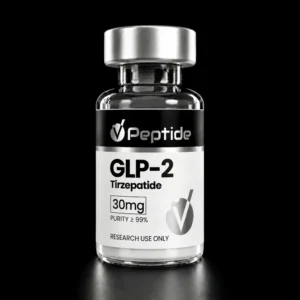
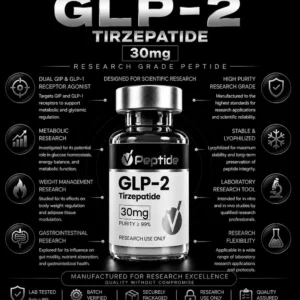
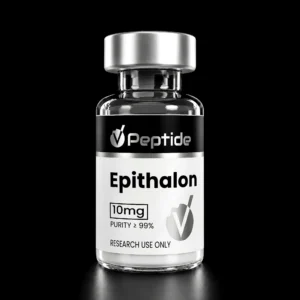
COA Verification Notice: Even if the vial label or product image states a certain concentration, always go by the COA for the true verified value. We reference the COA to determine the verified concentration and purity of each product, regardless of what the label or product image indicates.